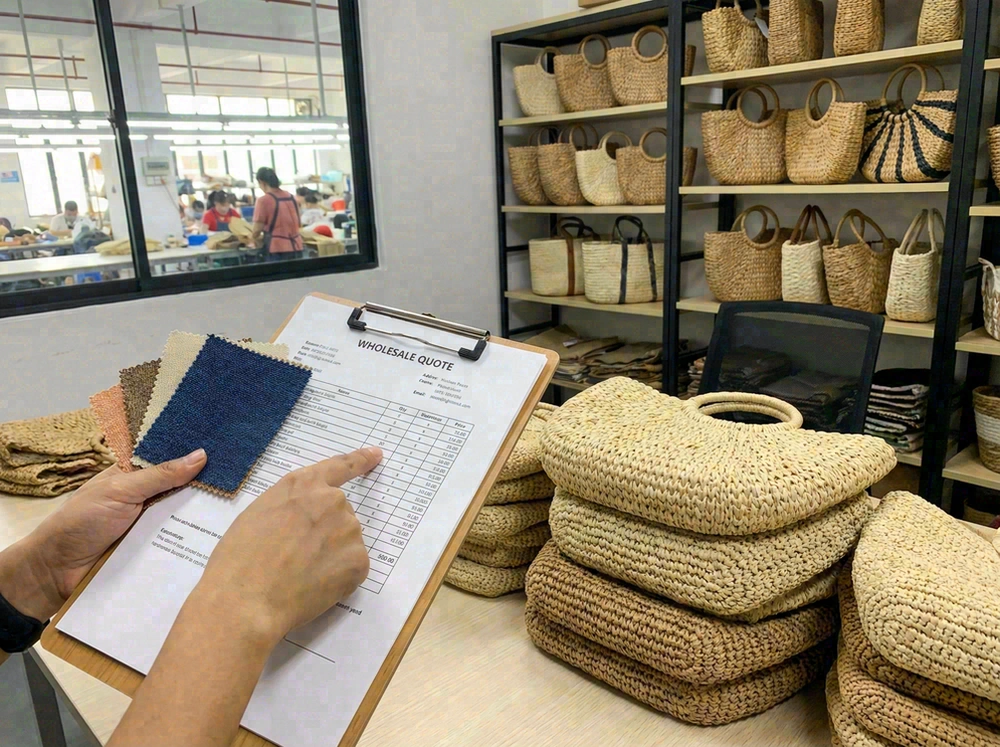
Sustainability has moved from nice-to-have to business requirement for many beach bag buyers. Whether driven by consumer demand, retailer requirements, or corporate ESG commitments, B2B buyers increasingly need eco-friendly options that deliver both environmental benefits and commercial viability.
This guide covers sustainable beach bag options from a sourcing perspective: what materials are genuinely sustainable, which certifications matter, how costs compare, and how to avoid greenwashing pitfalls that damage brand credibility.
Sustainable Material Quick Guide
- Organic Cotton: GOTS certified, 15-30% price premium, excellent customization
- Recycled PET (rPET): GRS certified, diverts plastic waste, durable and water-resistant
- Jute: Naturally sustainable, cost-competitive, biodegradable
- Hemp: Minimal inputs needed, highly durable, 20-40% premium
- Natural Fibers (Straw/Seagrass): Renewable, biodegradable, fashion appeal
Why Sustainability Matters for Beach Bag Buyers
Sustainability in beach bags serves multiple business objectives beyond environmental responsibility.
Consumer Demand
Research consistently shows growing consumer preference for sustainable products. Beach bags, used in natural environments, carry particular relevance—customers increasingly question bringing plastic-based products to beaches they're trying to protect.
Retailer Requirements
Major retailers are implementing sustainability requirements for suppliers. From Amazon's Climate Pledge Friendly program to Target's sustainability standards, access to certain sales channels now requires documented environmental credentials.
Corporate ESG
Corporate buyers purchasing promotional or branded items face internal ESG reporting requirements. Sustainable beach bags provide documented environmental benefits that support corporate sustainability reports.
Brand Differentiation
In crowded markets, sustainability provides meaningful differentiation. Eco-friendly positioning attracts specific customer segments willing to pay premium prices for aligned values.
Sustainable Material Options
Not all "eco-friendly" claims are equal. Understanding material options helps you make informed decisions and substantiate marketing claims.
Organic Cotton
What makes it sustainable: Organic cotton is grown without synthetic pesticides or fertilizers, using methods that maintain soil health and reduce water consumption compared to conventional cotton farming.
Certifications:
- GOTS (Global Organic Textile Standard): Covers entire supply chain from fiber to finished product
- OCS (Organic Content Standard): Verifies organic fiber content percentage
Practical considerations:
- Price premium: 15-30% over conventional cotton
- Excellent for customization (printing, embroidery)
- Familiar material for consumers
- Biodegradable at end of life
Recycled PET (rPET)
What makes it sustainable: Made from recycled plastic bottles, rPET diverts plastic from landfills and oceans while reducing demand for virgin petroleum-based materials.
Certifications:
- GRS (Global Recycled Standard): Verifies recycled content and tracks chain of custody
Practical considerations:
- Price premium: 10-20% over virgin materials
- Durable and water-resistant
- Strong sustainability story (visible plastic-to-product connection)
- Not biodegradable but extends plastic lifecycle
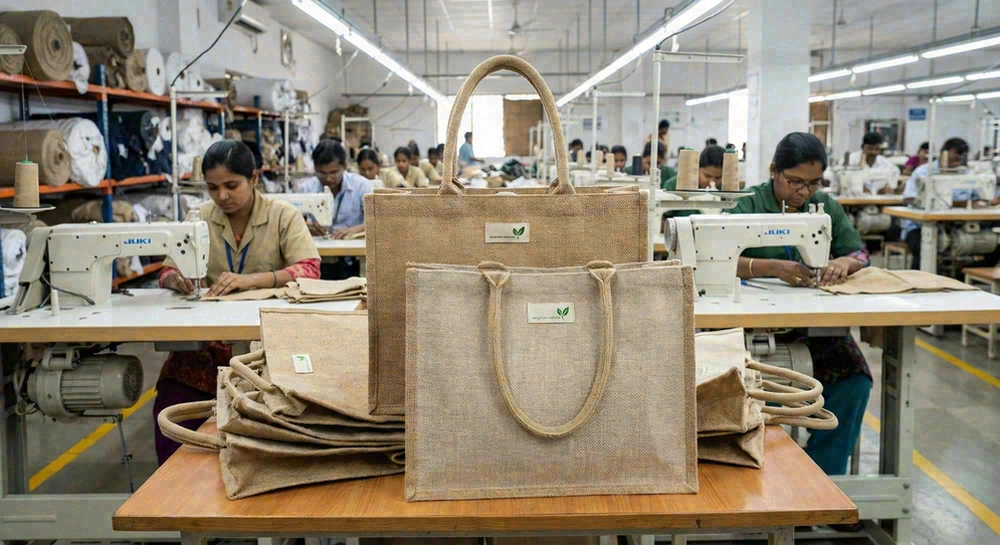
Jute
What makes it sustainable: Jute is naturally grown with minimal water requirements, absorbs CO2 during growth, and biodegrades completely at end of life. It requires few or no pesticides.
Certifications: Jute is inherently sustainable; specific certifications focus on processing and fair trade practices rather than the material itself.
Practical considerations:
- Price: Cost-competitive with conventional materials
- Natural aesthetic appeals to eco-conscious consumers
- Limited water resistance (absorbs moisture)
- Good for screen printing
Hemp
What makes it sustainable: Hemp grows quickly with minimal water and no pesticides, improves soil health, and produces extremely durable fiber.
Certifications: GOTS certification available for organic hemp.
Practical considerations:
- Price premium: 20-40% over cotton
- Exceptional durability—outlasts most alternatives
- Limited availability compared to cotton
- Softens with use while maintaining strength
Natural Fibers (Straw, Raffia, Seagrass)
What makes them sustainable: These renewable plant materials biodegrade completely and typically require minimal processing. They're harvested from fast-growing plants.
Practical considerations:
- Strong fashion appeal and natural aesthetic
- Lower durability than textile alternatives
- Limited customization options
- Pricing varies by material and region
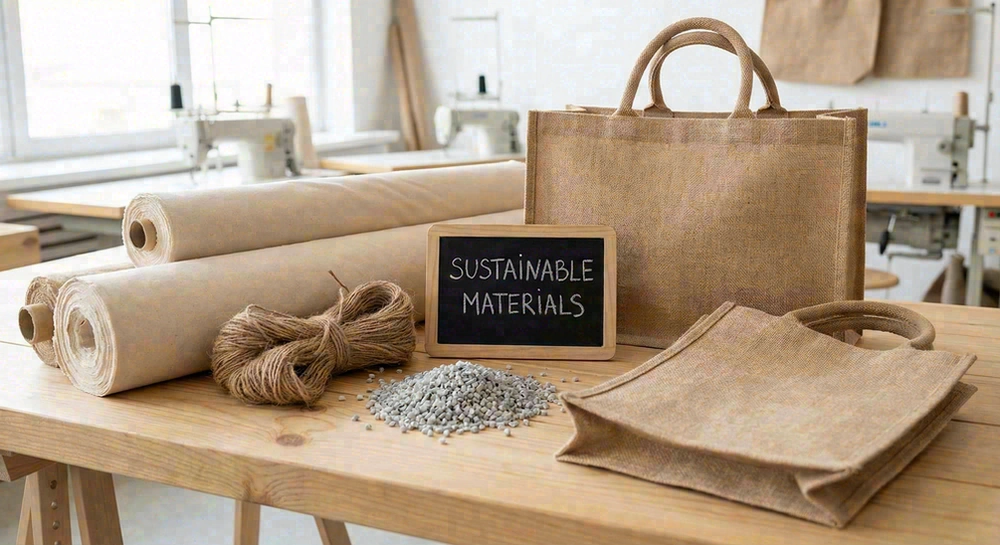
Sustainable Materials Comparison
| Material | Price Premium | Key Certification | Durability | Best For |
|---|---|---|---|---|
| Organic Cotton | +15-30% | GOTS | High | Premium retail, promotional |
| Recycled PET | +10-20% | GRS | Very High | Active/outdoor, corporate |
| Jute | Cost-competitive | Fair Trade | High | Value eco-positioning |
| Hemp | +20-40% | GOTS (organic) | Highest | Premium durability focus |
| Natural Fibers | Varies | N/A | Low-Moderate | Fashion retail |
Sustainability Certifications Explained
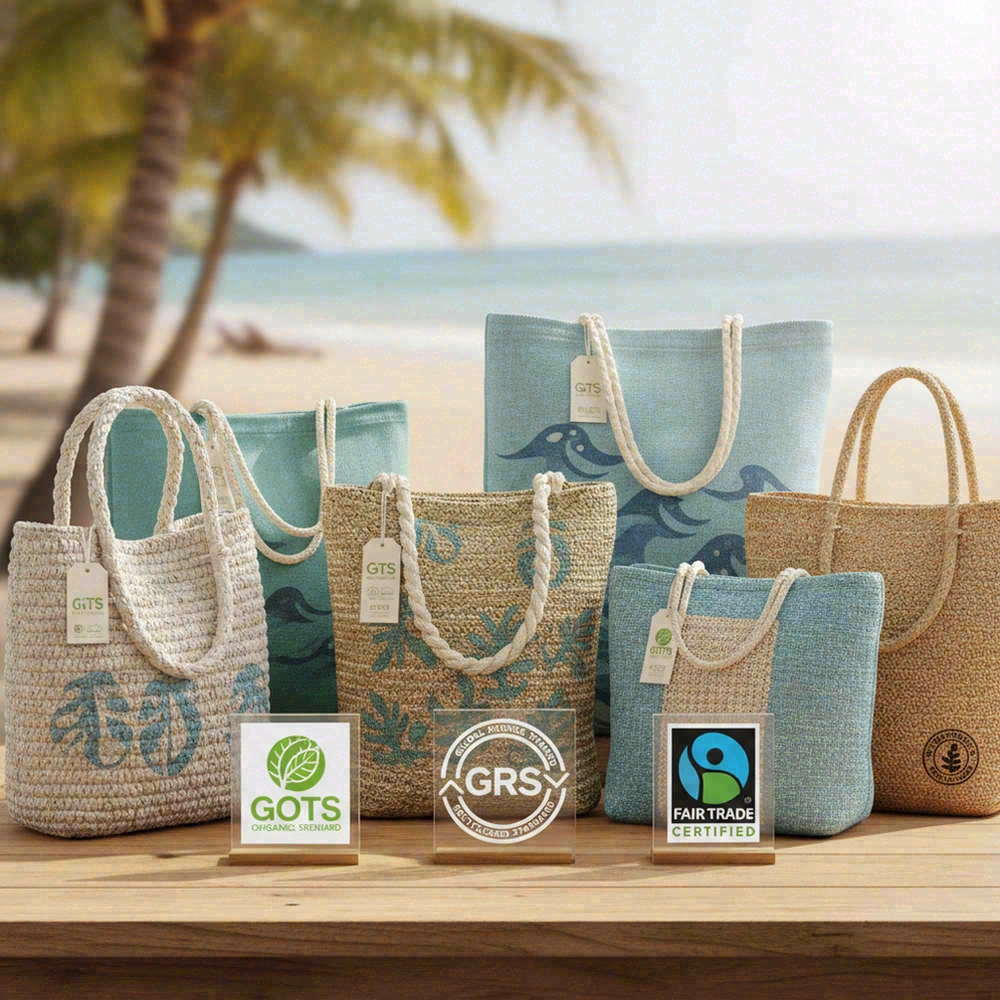
Certifications provide third-party verification of sustainability claims, protecting both you and your customers from greenwashing.
GOTS (Global Organic Textile Standard)
What it covers: The entire supply chain for organic textiles—from fiber harvesting through processing, manufacturing, packaging, labeling, and trading.
Requirements:
- Minimum 70% organic fibers for "Made with Organic" label
- Minimum 95% organic fibers for "Organic" label
- Environmental criteria for processing (wastewater, chemicals)
- Social criteria (fair labor practices)
Why it matters: GOTS is the most comprehensive organic textile certification. It allows you to make verified claims that satisfy retailer requirements and consumer expectations.
GRS (Global Recycled Standard)
What it covers: Recycled content in products, with chain of custody verification throughout the supply chain.
Requirements:
- Minimum 20% recycled content for certification
- 50%+ recycled content to use GRS logo on products
- Social and environmental processing requirements
- Annual audits and documentation
Why it matters: GRS validates recycled content claims, essential for rPET products. Without certification, recycled content claims lack credibility.
Fair Trade Certification
What it covers: Social and economic aspects of production—fair wages, safe working conditions, community development.
Why it matters: Sustainability includes social dimensions. Fair Trade certification addresses ethical sourcing concerns that environmentally-focused certifications may not cover.
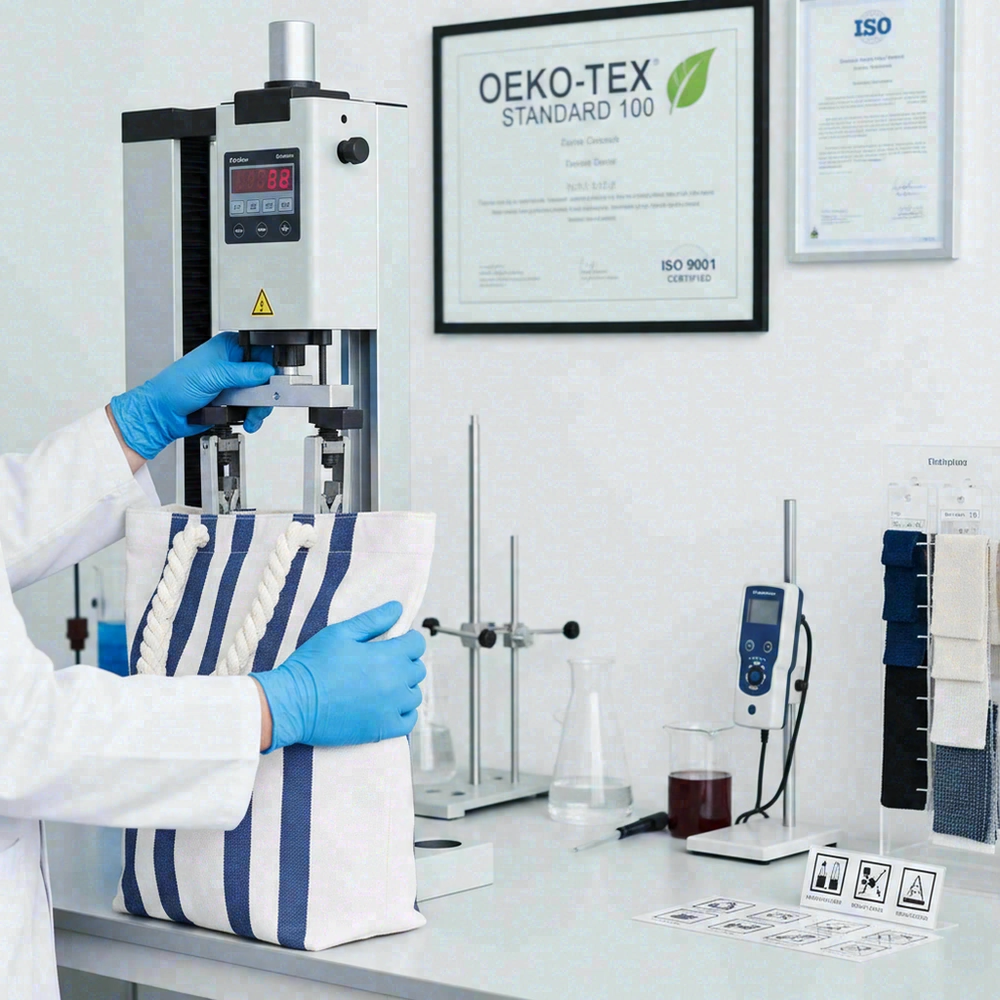
OEKO-TEX Standard 100
What it covers: Tests for harmful substances in textiles—not specifically sustainability, but ensures products are safe for consumers and environment.
Why it matters: Complements sustainability certifications by verifying chemical safety. Some sustainable materials may still contain harmful dyes or finishes.
Manufacturing Sustainability
Material choice is only part of sustainability. Manufacturing processes also contribute to—or detract from—environmental impact.
Energy and Water Use
Responsible manufacturers invest in:
- Water recycling and treatment systems
- Energy-efficient equipment
- Renewable energy sources where available
- Waste reduction and recycling programs
Chemical Management
Sustainable production minimizes harmful chemicals through:
- Water-based inks and dyes
- ZDHC (Zero Discharge of Hazardous Chemicals) compliance
- Restricted substance lists (RSL) adherence
Certifications for Manufacturing
- ISO 14001: Environmental management systems
- OEKO-TEX STeP: Sustainable textile production
- Bluesign: Sustainable textile processing
Pro Tip: Beyond Materials
When evaluating suppliers for sustainability, ask about their manufacturing practices—not just material certifications. A factory using certified organic cotton but dumping untreated wastewater isn't truly sustainable. Look for comprehensive environmental management, not just material claims.
Avoiding Greenwashing
Greenwashing—making misleading environmental claims—damages brand credibility and may violate advertising regulations. Protect your brand with verified claims.
Common Greenwashing Pitfalls
- Vague claims: "Eco-friendly" or "green" without specific meaning
- Hidden tradeoffs: Highlighting one benefit while ignoring larger impacts
- Unverified claims: No certification or third-party verification
- Irrelevant claims: Emphasizing legally required practices as voluntary benefits
- Lesser of evils: Claiming "greener" than alternatives that are harmful
Best Practices
- Be specific: "Made with 50% recycled PET" is better than "eco-friendly"
- Verify claims: Use certified materials and maintain documentation
- Full transparency: Acknowledge limitations alongside benefits
- Third-party validation: Certifications provide credibility
Key Insight: Regulatory Trend
Environmental marketing claims face increasing regulatory scrutiny. The EU's Green Claims Directive and FTC Green Guides in the US require substantiation for environmental claims. Investing in certified materials now protects you from future compliance issues.
Cost Considerations
Sustainable materials typically cost more, but the premium varies significantly by material and certification level.
Price Premium Ranges
- Jute over conventional canvas: Often cost-competitive or slightly lower
- rPET over virgin polyester: 10-20% premium
- Organic cotton over conventional: 15-30% premium
- Hemp over cotton: 20-40% premium
- Full GOTS certification: Additional 5-10% for certification costs
ROI Considerations
Sustainable products often justify premiums through:
- Higher retail prices: Consumers pay more for verified sustainability
- Market access: Required for certain retailers and corporate buyers
- Brand value: Sustainability strengthens brand positioning
- Reduced risk: Future-proofing against regulatory changes
Marketing Sustainable Beach Bags
Effective sustainability marketing connects environmental benefits to consumer values.
What Resonates with Consumers
- Tangible impact: "Made from 10 recycled plastic bottles" is more compelling than "sustainable"
- Certification logos: Visual proof of verified claims
- Origin stories: Where materials come from and how they're made
- End-of-life: What happens when the product is finished
Messaging Approaches
- Problem-solution: Plastic pollution → recycled material beach bags
- Values alignment: "For people who care about the beaches they love"
- Quality connection: Sustainable often correlates with better quality
- Transparency: Share your sustainability journey, including challenges
Frequently Asked Questions
Which sustainable material is best for beach bags?
It depends on your priorities. For maximum durability and sustainability story, consider rPET. For natural biodegradability, jute or organic cotton. For premium positioning, organic cotton or hemp. Each material serves different market segments effectively.
How much more do sustainable beach bags cost?
Expect 10-40% cost increase depending on material. Jute is often cost-competitive with conventional materials. Organic cotton and rPET typically add 15-25%. Hemp and specialty materials can add 30-40% or more.
Are certifications required for sustainability claims?
Legally, it depends on your market. However, certifications provide credibility and protection against greenwashing accusations. For B2B sales to major retailers, certifications are increasingly required.
Can sustainable beach bags be as durable as conventional options?
Often more durable. rPET and hemp exceed conventional materials in durability. Organic cotton performs similarly to conventional cotton. Only some natural fibers (straw, seagrass) sacrifice durability for sustainability.
What's the minimum order for sustainable beach bags?
MOQs are similar to conventional options: typically 300-500 units for organic cotton, 500-1000 for rPET and jute. Some certified materials may have higher minimums due to supply chain requirements.
Conclusion: Making Sustainable Choices
Sustainable beach bags represent both environmental responsibility and business opportunity. The key is matching material choices to your market positioning and ensuring claims are verified and credible.
Key recommendations:
- Choose materials that align with your brand values and customer expectations
- Invest in proper certifications for credible sustainability claims
- Consider full lifecycle impact—materials, manufacturing, and end-of-life
- Be specific and transparent in sustainability marketing
- Work with suppliers who demonstrate comprehensive environmental commitment
At Clanbag, we offer sustainable beach bag options including organic cotton, jute, and recycled materials. Our factory maintains ISO 14001 environmental management certification and works with certified material suppliers to deliver verified sustainability.
Ready to explore sustainable beach bag options? Contact us for material samples and sustainability documentation.