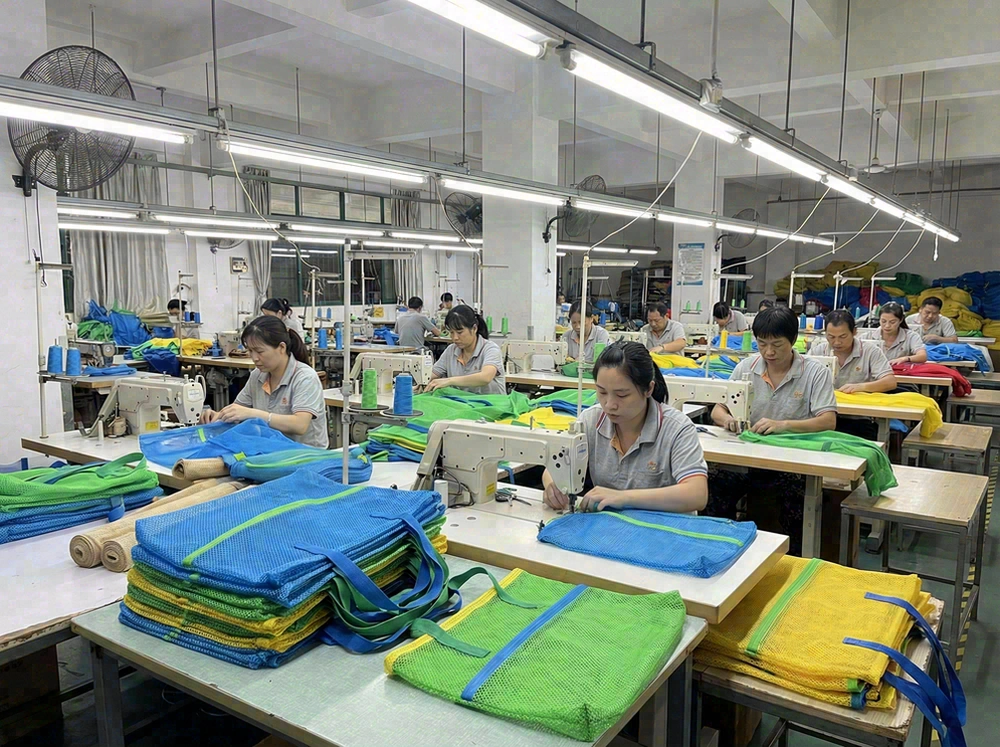
Certifications serve as trust shortcuts in B2B relationships—proof that a manufacturer meets recognized standards for quality, safety, and ethical operations. For beach bag buyers, understanding which certifications matter and what they actually verify helps you make informed sourcing decisions and meet your own compliance requirements.
This guide explains the key certifications relevant to beach bag manufacturing, what they test, how to verify them, and their practical implications for B2B buyers.

Key Certifications at a Glance
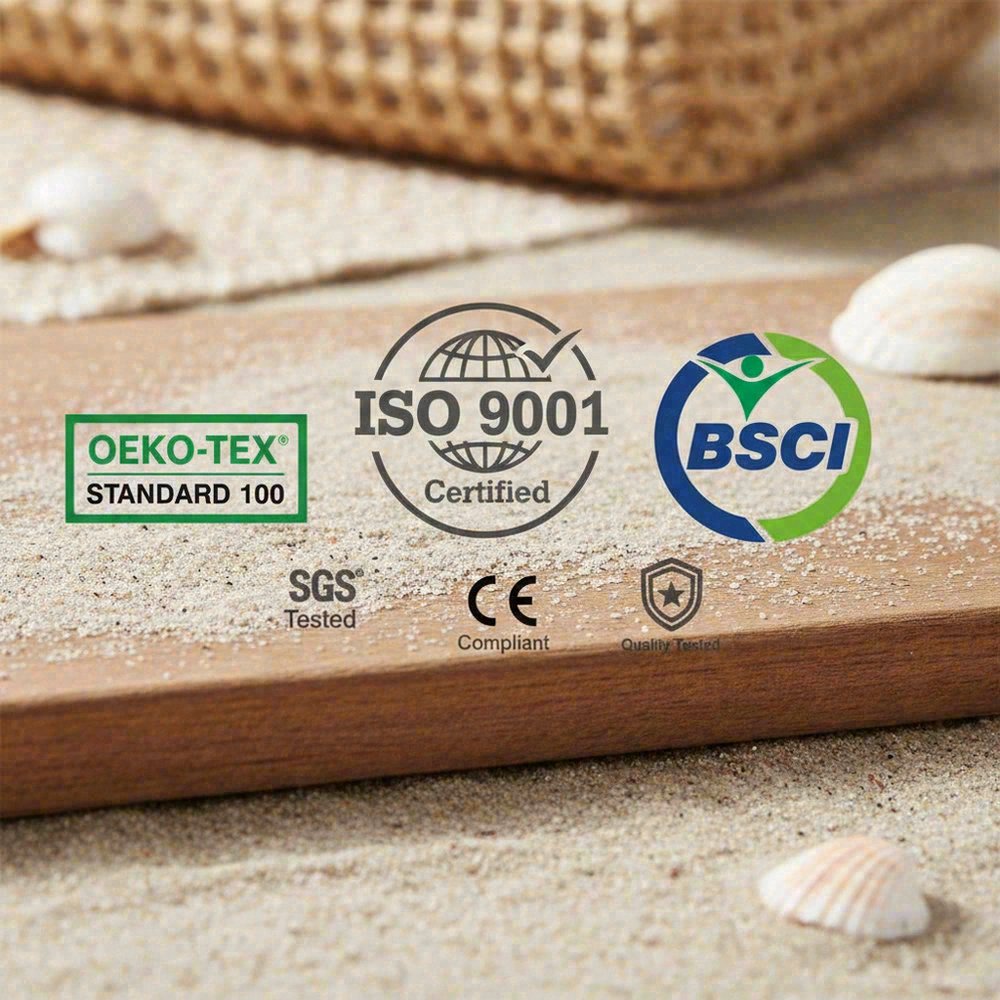
- ISO 9001: Quality management systems—ensures consistent production processes
- OEKO-TEX Standard 100: Tests for harmful substances in textiles
- BSCI/SEDEX: Social compliance—verifies ethical labor practices
- REACH: EU chemical regulation compliance
- GRS: Verifies recycled content claims
Why Certifications Matter for Beach Bag Buyers
Certifications reduce risk in international sourcing by providing third-party verification of manufacturer claims. They matter for three practical reasons:
Market Access
Many retailers and markets require specific certifications as a condition of doing business. Major retail chains increasingly mandate supplier certifications for quality, safety, and social compliance. Without proper documentation, your products may be rejected at customs or refused by retailers.
Legal Compliance
Regulations like REACH (EU) and CPSIA (US) establish legal requirements for products sold in those markets. Non-compliance can result in product seizures, recalls, fines, and reputational damage. Certifications provide documentation of compliance.
Risk Reduction
Certified suppliers have established quality systems, reducing the likelihood of defective products, delivery failures, or ethical violations that could affect your business.
Quality Management Certifications
Quality management certifications verify that a manufacturer has systematic processes for consistent production quality.
ISO 9001
What it certifies: The manufacturer has implemented a quality management system covering processes from material sourcing through final inspection.
What it tests: Auditors examine documentation, processes, quality records, customer feedback handling, and continuous improvement systems—not individual products.
Validity: 3 years, with annual surveillance audits to maintain certification.
Practical meaning for buyers: ISO 9001 indicates the manufacturer has formalized quality processes. It doesn't guarantee product quality but suggests systematic approaches that typically improve consistency.
Pro Tip: Verify ISO Certification
Request the certificate number and issuing body, then verify on the certification body's website. Legitimate ISO certificates are publicly verifiable. Be cautious of certificates from unknown certification bodies—some lack proper accreditation.
ISO 14001
What it certifies: Environmental management systems—the manufacturer has processes to minimize environmental impact.
Relevance for beach bags: Increasingly important for buyers with sustainability requirements. Indicates the factory actively manages waste, energy use, and environmental compliance.
Product Safety Certifications
Product safety certifications verify that materials and finished products meet chemical safety standards.
OEKO-TEX Standard 100
What it certifies: Textile products have been tested for over 300 harmful substances and meet safety limits.
Testing scope:
- Heavy metals (lead, cadmium, mercury)
- Formaldehyde
- Pesticides
- Allergenic dyes
- pH levels
- Color fastness
Product classes: Beach bags typically fall into Class III (products without direct, prolonged skin contact) or Class IV (decorative materials), which have less stringent limits than baby products (Class I).
Validity: 1 year—certificates must be renewed annually.
Key Insight: 2025 OEKO-TEX Updates
The OEKO-TEX Association updates test criteria annually. For 2025, new regulations affecting limit values took effect April 1, 2025. Ensure any OEKO-TEX certificates you review are current and issued under current standards.
REACH Compliance (EU)
What it requires: Products sold in the EU must comply with REACH regulations governing chemical substances. This includes restrictions on Substances of Very High Concern (SVHCs).
Beach bag relevance: Applies to dyes, finishes, hardware coatings, and material treatments. Non-compliant products can be refused entry at EU borders.
Documentation: REACH compliance is typically demonstrated through test reports from accredited laboratories rather than a single certification.
CPSIA/CPSC (US)
What it requires: Products intended for children under 12 must meet Consumer Product Safety Improvement Act requirements, including lead content limits and testing requirements.
Beach bag relevance: If marketing beach bags for children, CPSIA testing and documentation are required. Adult products have fewer requirements but still must meet general safety standards.
Social Compliance Certifications
Social compliance certifications verify ethical labor practices and working conditions in manufacturing facilities.
BSCI (Business Social Compliance Initiative)
What it audits:
- Fair remuneration
- Working hours
- Occupational health and safety
- No child labor
- No forced labor
- Freedom of association
- Environmental protection
Grading system: Factories receive grades from A (outstanding) to E (unacceptable). Major retailers typically require B or better.
Program scope: Over 2,400 member companies participate in BSCI, making it one of the most widely recognized social compliance programs.
SEDEX/SMETA
What it covers: Similar scope to BSCI—labor standards, health & safety, environment, and business ethics.
Difference from BSCI: SEDEX is a data-sharing platform; SMETA is the audit methodology. Results are shared with registered buyers, enabling supply chain transparency.
Sustainability Certifications
Sustainability certifications verify environmental claims about materials and manufacturing processes.
GRS (Global Recycled Standard)
What it verifies: Recycled content in products and tracks materials through the supply chain.
Requirements:
- Minimum 20% recycled content for certification
- 50%+ recycled content to use GRS logo on products
- Annual on-site audits
- Chain of custody documentation
Beach bag relevance: Essential for products marketed as recycled or sustainable. GRS certification validates recycled content claims that otherwise rely on manufacturer statements.
GOTS (Global Organic Textile Standard)
What it certifies: Organic fiber content and processing standards throughout the supply chain.
Labeling levels:
- "Organic" label: 95%+ certified organic fibers
- "Made with Organic" label: 70%+ certified organic fibers
Beach bag relevance: Applies to cotton canvas bags marketed as organic. GOTS certification provides credible verification of organic claims.
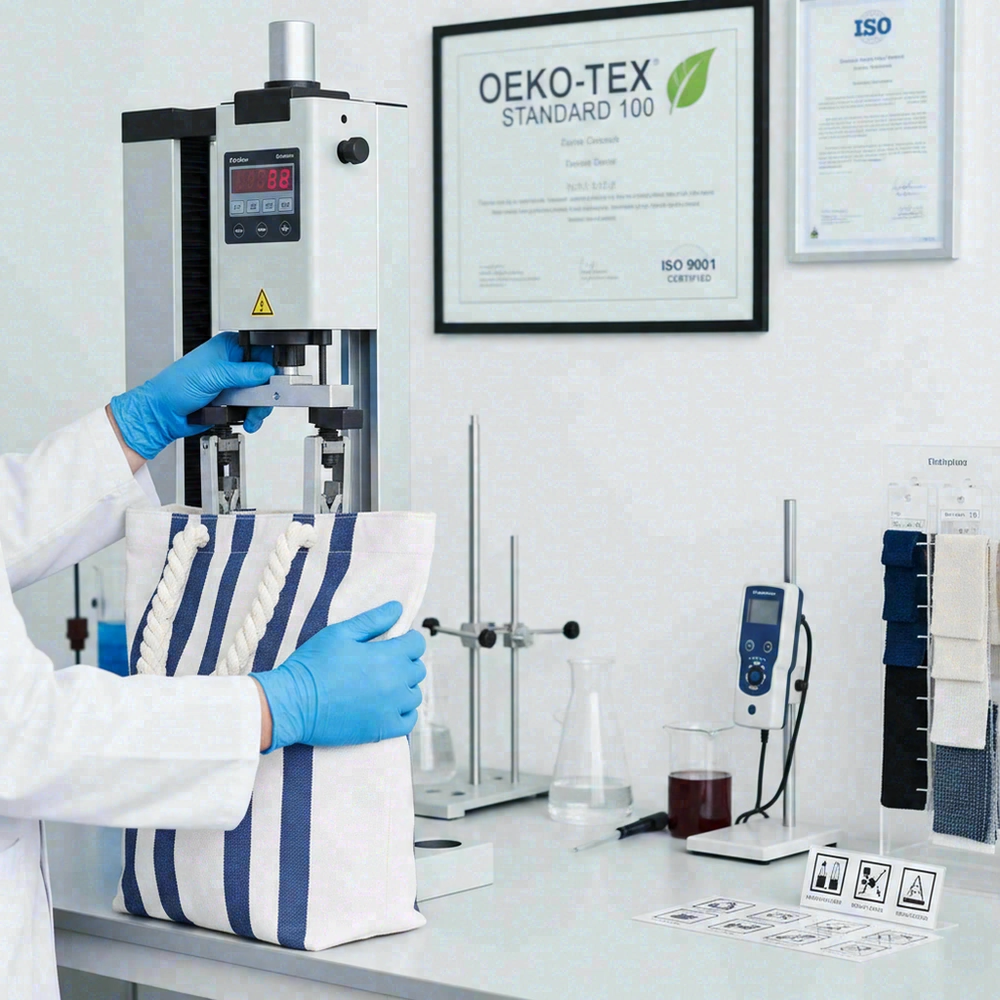
Testing Requirements for Beach Bags
Beyond certifications, specific testing verifies product performance and safety.
Material Testing
- Tensile strength: Fabric resistance to tearing
- Abrasion resistance: Durability under friction
- Color fastness: Resistance to fading from light, washing, rubbing
- Weight verification: Confirms fabric weight matches specifications
Construction Testing
- Seam strength: Load capacity before seam failure
- Handle attachment: Pull strength at connection points
- Zipper function: Cycle testing for repeated use
- Hardware durability: Corrosion resistance, function under load
Chemical Testing
- Heavy metals: Lead, cadmium, mercury content
- Formaldehyde: Particularly relevant for treated fabrics
- AZO dyes: Restricted dyes that can release harmful amines
- pH testing: Ensures materials aren't excessively acidic or alkaline
Regional Compliance Requirements
Different markets have different regulatory requirements. Understanding these helps you source products that meet your target market needs.
| Market | Key Requirements | Common Certifications |
|---|---|---|
| European Union | REACH compliance, CE marking (if applicable), strict heavy metal limits | OEKO-TEX, GRS, REACH test reports |
| United States | CPSIA for children's products, CA Prop 65 warnings, CPSC safety standards | CPSIA test reports, OEKO-TEX |
| United Kingdom | UK REACH (post-Brexit), product safety regulations | OEKO-TEX, UK REACH compliance |
| Australia | Product safety standards, consumer protection laws | Test reports from accredited labs |
Verifying Certificate Authenticity
Certificate fraud exists in manufacturing. Protect yourself by verifying documentation.
Verification Steps
- Request original certificates: Ask for certificate numbers and issuing body details
- Check validity dates: Ensure certificates haven't expired
- Verify online: Most certification bodies maintain public databases
- OEKO-TEX: oeko-tex.com/en/label-check
- GRS: textileexchange.org (certified suppliers database)
- ISO: Contact issuing certification body directly
- Check scope: Ensure the certificate covers the specific products and facilities relevant to your order
- Request audit reports: For social compliance, ask for recent audit reports rather than just certificates
Warning: Common Certificate Issues
- Expired certificates still being presented as current
- Certificates for one facility applied to a different production location
- Product certificates that don't cover the specific items being ordered
- Certificates from non-accredited or unknown certification bodies
Cost Implications of Certified Products
Certifications add costs to manufacturing, reflected in product pricing.
Typical Cost Factors
- Certification fees: Annual fees for maintaining certifications
- Audit costs: Third-party auditor fees for annual or periodic audits
- Testing costs: Laboratory testing for product certifications
- System implementation: Internal resources for maintaining compliance systems
- Material premiums: Certified materials (organic, recycled) often cost more
Price Impact Estimates
- Basic quality certifications (ISO): Minimal direct product price impact
- Product testing (OEKO-TEX): 2-5% price premium
- Recycled content (GRS): 10-20% material cost increase
- Organic materials (GOTS): 15-30% material cost increase
Frequently Asked Questions
Which certifications are most important for beach bags?
For most markets, ISO 9001 (quality management) and OEKO-TEX Standard 100 (material safety) provide foundational assurance. Add BSCI or SEDEX for social compliance and GRS if marketing sustainability claims. Specific markets may require additional certifications.
Can a manufacturer have ISO 9001 but still produce low-quality products?
Yes. ISO 9001 certifies that quality management systems exist, not that products meet specific quality levels. It indicates the manufacturer has processes for consistency, but actual product quality depends on the standards they've set and how well they follow their own systems.
How often should I verify supplier certifications?
Verify certifications annually at minimum, or whenever placing new orders. Certifications can expire or be revoked between orders. Request updated documentation as part of your regular supplier review process.
Are certifications required by law?
Some are. REACH compliance is legally required for EU market access. CPSIA testing is required for children's products sold in the US. Many certifications (ISO, BSCI) are voluntary but may be required by specific retailers or buyers.
What if my supplier has some certifications but not others?
Evaluate based on your specific needs. A supplier with ISO 9001 and OEKO-TEX but without BSCI may be acceptable if social compliance isn't a buyer requirement. Focus on certifications that address your market access and buyer requirements.
Conclusion: Using Certifications Effectively
Certifications are tools for risk reduction and market access—not guarantees of perfection. Use them as part of a comprehensive supplier evaluation that includes samples, references, and ongoing quality monitoring.
Key takeaways:
- Identify which certifications your market and buyers require
- Verify certificate authenticity before relying on them
- Understand what each certification actually tests and guarantees
- Factor certification costs into pricing expectations
- Maintain certification records as part of compliance documentation
At Clanbag, we maintain ISO 9001 quality management certification, OEKO-TEX Standard 100 for material safety, and BSCI social compliance audit. Our certifications are current and available for buyer verification upon request.
Need certified beach bag products? Contact us for certification documentation and compliance consultation.