Material Safety Options Process-Based QA Documentation Ready
Request QA Documents

Certifications & Quality Assurance: Beach Bag Quality Certification

For international buyers, "certified" only matters when it matches the material, market, and use case. Clanbag builds a documentation-ready quality system so your order can meet beach bag quality certification requirements with clear evidence - from AZO-free and phthalate-free material options to AQL-based inspections and shipment-ready reports. Our team supports OEM/ODM projects across mesh, canvas, straw, and mixed-material beach bags, aligning specs, labeling, and testing to your destination rules. If you need third-party verification, we can coordinate testing with accredited labs and share reports under NDA.

Material safety options

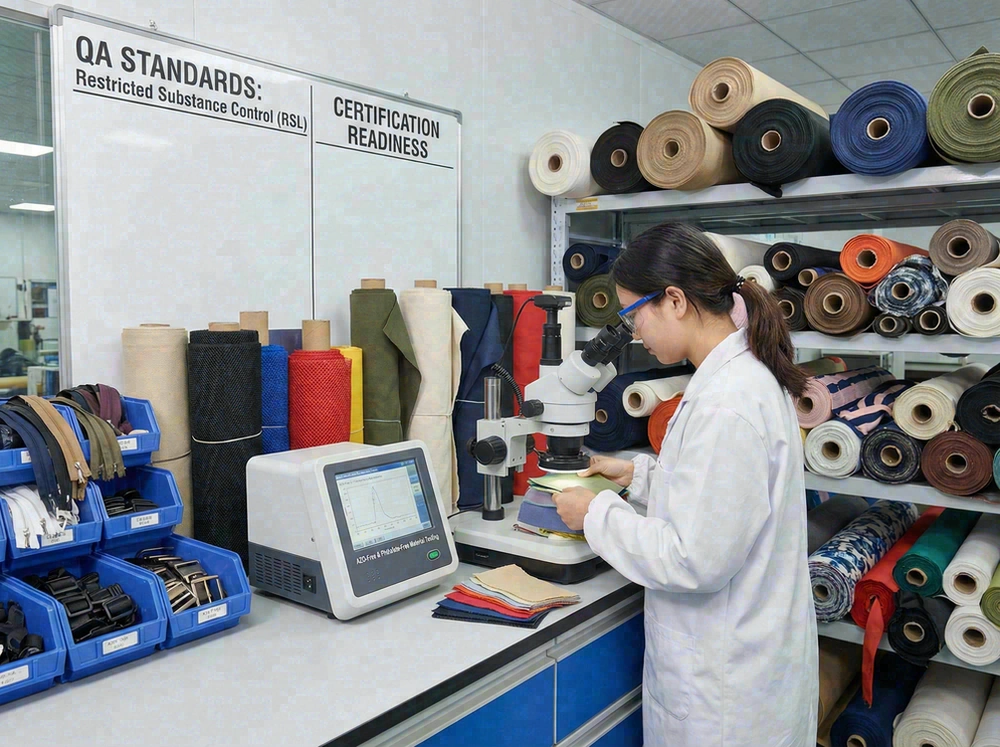
AZO-free dyes, restricted-substance controls, and declarations aligned to your target market and material set.

Process-based quality assurance

Incoming checks, in-line controls, and final inspections with sampling plans that match buyer standards.

Documentation you can use

Document packs mapped to the exact SKU and production batch for retail onboarding and import clearance.


QA documentation and testing for beach bags
Compliance Ready
EU, US, UK Markets

Common Certifications and Compliance Programs Buyers Ask For

There is no single universal certificate that covers every beach bag. Instead, buyers typically evaluate a mix of bag manufacturer certifications (factory systems and social compliance) plus product-level evidence (chemical and physical test reports). Below are the most common programs we support by providing current documents, arranging testing, or aligning production controls to your required standard.

Compliance documents for beach bag orders

Note: Availability and applicability depend on product design, material selection, printing/ink systems, and destination market. We provide documents matched to your exact SKU and order scope.

Quality management and factory control

Quality management system (QMS)

What it signals: Documented processes for inspection, corrective actions, and consistent output across repeat orders.

Evidence we provide: QA flow overview, inspection checklists, sampling plan options, and batch traceability records.

AQL-based inspections

What it signals: A standardized approach to sampling and defect classification for pre-shipment acceptance.

Evidence we provide: Inspection report templates and photos/videos of checkpoints (incoming, in-line, final) when requested.

Social and ethical compliance (when required)

Third-party social audits (examples: BSCI, SMETA)

What it signals: Workplace practices aligned to buyer codes of conduct and retailer onboarding requirements.

Evidence we provide: Available audit documentation or support for customer-initiated audits depending on program scope and NDA.

Chemical and material safety compliance

AZO-free and restricted dyes control

What it signals: Reduced risk of banned amines in dyed textiles used for mesh and canvas beach bags.

Evidence we provide: Material declarations and third-party test reports when required by your destination market.

Phthalate and heavy metals limits (PVC/prints/accessories)

What it signals: Reduced risk for soft plastics, coatings, inks, and accessories used in trims and decorations.

Evidence we provide: Supplier declarations, MSDS where applicable, and lab testing options per component.

Sustainability-linked claims (only when specified)

Recycled content programs (example: GRS)

What it signals: Verified chain-of-custody and recycled content for specific recycled fabrics.

Evidence we provide: Documentation limited to the materials and SKUs covered by the program; evidence shared per order scope.

Responsible packaging sourcing (example: FSC)

What it signals: Packaging materials sourced under a controlled paper supply chain.

Evidence we provide: Packaging documentation for cartons/hangtags when the order requires certified packaging.

Market regulations and buyer standards

EU/UK chemical compliance frameworks (example: REACH)

What it signals: Controls around SVHC and restricted substances for components shipped into EU/UK markets.

Evidence we provide: Declarations and test reports tailored to your material list and destination requirements.

US market requirements (examples: CPSIA for children's products, Prop 65)

What it signals: Risk controls for products intended for children or products sold in regulated US channels.

Evidence we provide: Guidance on scope and testing plan; documents depend on product use and component selection.

Export Compliance Support for Global Markets

Beach bag quality certification requirements vary by destination, sales channel, and end-user. We help buyers translate market rules into a practical plan: which components need declarations, which tests are necessary, and what documents should be prepared before shipment. This is also where bag manufacturer certifications (factory systems and audits) can matter for retailer onboarding and vendor approval.

EU and UK

Typical Requirements

  • Chemical compliance framework alignment (example: REACH scope and SVHC awareness)
  • Component-level documentation for textiles, coatings, prints, and accessories
  • Labeling and packaging requirements based on buyer program

How we support: We map your bill of materials to an evidence plan (declarations and testing) and prepare a document pack matched to the SKU.

United States

Typical Requirements

  • Channel-specific requirements for retailers and brands
  • Additional scope if the product is marketed for children (example: CPSIA-related needs)
  • State-level or program-level chemical disclosure expectations (example: Prop 65 considerations)

How we support: We confirm intended use and channel, then recommend the right testing and documentation scope to avoid over-testing and delays.

Australia, Canada & Others

Typical Requirements

  • Product safety and labeling expectations based on category and channel
  • Documentation readiness for customs and warehouse receiving

How we support: We provide consistent shipment-ready documentation and can coordinate third-party tests when required.

Standard Export Documentation

  • Commercial invoice and packing list (shipment documents)
  • Material declarations and compliance statements (per SKU)
  • Inspection records (in-line and/or final, when requested)
  • Third-party lab test reports (when required)
  • Carton marking and labeling confirmation (per buyer spec)
Export compliance support for beach bags
Fast Track Your Compliance

How to Request a QA Document Pack (Fast and Accurate)

The fastest way to get the right documents is to scope them to the exact SKU. Share a few details and we will respond with the most relevant certificates, declarations, and testing options for your compliance workflow.

What to Send Us

  • Product photo or tech pack (or a link to your reference style)
  • Material list: fabric type (mesh/canvas/straw), coatings, prints, and accessories
  • Destination market(s) and sales channel (retail, promotional, hospitality, e-commerce)
  • Your required standard or restricted substance list (RSL), if available
  • Target timeline for sampling and shipment
Send requirements for document matching
Request a QA document pack

What You Get Back

  • A recommended compliance evidence plan (what to declare vs. what to test)
  • Available declarations and certificates relevant to your SKU scope
  • Inspection approach and reporting format options (including AQL-based inspection)
  • Third-party testing pathways if your program requires independent reports

Fast-Track Tips

  • 1 Include accessory details (zippers, pulls, hooks, logos) because they often drive chemical scope.
  • 2 Confirm whether the bag is intended for children or sold as a children's product (this can change the compliance path).
  • 3 If you have a retailer manual, share it early so labeling and test methods match the program.

Material Safety: AZO-Free, Phthalate-Free, and Restricted Substance Control

Material safety is the foundation of beach bag quality certification readiness. Beach bags often combine textiles (mesh or canvas), trims (webbing, zippers, metal hooks), coatings (PU/PVC), and printed elements - and each component can carry different chemical risks. Our approach is to control risk at the component level, then compile a document pack that reflects the final bill of materials for your SKU.

Component-level sourcing controls

We align fabric, webbing, lining, coatings, inks, and hardware to your restricted substance list (RSL) or target market framework before sampling is approved.

Documented material declarations

For key materials, we prepare declarations (for example: AZO-free dyes, phthalate limits) and keep them linked to the supplier and material code used for the order.

Risk-based testing plan

When a buyer needs higher assurance, we recommend targeted third-party tests on the highest-risk components (prints, coatings, soft plastics, and colored textiles).

AZO-free and phthalate-free material options

Buyer Checklist

  • Share your destination market and channel (retail, promotional, hospitality, brand) so we align the right compliance scope.
  • List all materials and components, including prints, patches, coatings, and accessories (these drive most testing requirements).
  • Provide your RSL or required standard early so sampling and material selection do not need rework.

Restricted Substance Control Overview

Substance Group Why It Matters How We Control
AZO dyes (banned amines) Common buyer focus for dyed textiles used in mesh and canvas components. Prefer compliant dye systems, request supplier declarations, and arrange lab testing when required.
Phthalates (soft plastics and coatings) Relevant for PVC/PU trims, coated fabrics, and some printed elements. Confirm material composition early, select compliant alternatives when possible, and test high-risk components by request.
Heavy metals (lead, cadmium) Can appear in pigments, metal accessories, and some coatings. Control accessory sourcing, validate component specifications, and support third-party verification for regulated channels.
Formaldehyde and odor-related risks A frequent retailer QA concern for textile goods and packaging storage. Process controls, ventilation and curing steps where needed, and optional testing aligned to buyer standards.

Quality Testing Procedures for Wholesale Beach Bags

A certification or report is only meaningful when the production reality matches the sample. Our QA system focuses on repeatability: clear specs, controlled materials, and inspection checkpoints that reduce variation across bulk production. For OEM/ODM beach bags, we also recommend performance tests that reflect real use (weight loading, seam durability, and hardware reliability).

QA Flow: From Sample to Shipment

1

Pre-production sample approval

Materials, measurements, construction details, print placement, and labeling requirements.

Locks the reference standard before bulk production begins.
2

Incoming material inspection

Color, handfeel, fabric weight/consistency, accessory appearance, and basic function checks (zippers, snaps).

Prevents defects from entering the production line.
3

In-line process control

Stitch consistency, seam reinforcement, handle attachment, print quality, and critical measurements.

Catches problems early to avoid large-scale rework.
4

Final inspection and packing check

Overall workmanship, function, labeling, packing method, carton markings, and assortment accuracy.

Reduces claim risk and supports smoother receiving at your warehouse.
Quality testing for beach bag durability

Acceptance Standards

Sampling and defect limits can be aligned to your internal standard. Many buyers use AQL-based acceptance with defined major/minor defect categories.

  • Use your existing AQL standard and defect list
  • Adopt a mutually agreed sampling plan for the PO
  • Add critical-to-quality checkpoints for branded retail programs

Available Test Categories

Durability and Performance

  • Handle and strap load testing (static and/or repeated lifting)
  • Seam strength checks on stress points
  • Zipper cycle checks and smoothness evaluation
  • Hardware function checks (buckles, hooks, snaps) and pull resistance

Appearance and Color Fastness

  • Color fastness to rubbing (dry/wet) for dyed and printed areas
  • Print adhesion and cracking checks (where applicable)
  • Abrasion resistance checks for high-contact areas

Environment-Related Risks

  • Salt and humidity exposure checks for metal parts (coastal use cases)
  • Heat and UV aging checks for outdoor storage scenarios
  • Odor and storage-related checks for retailer QA

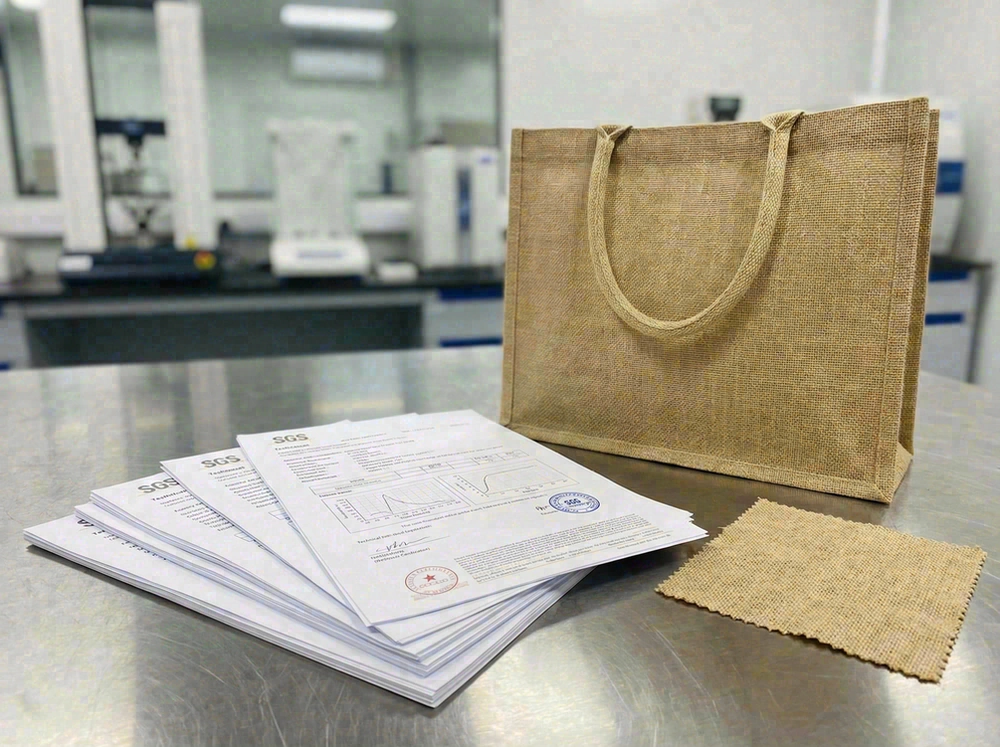
What Testing Reports and Certificates Can Be Provided

To support your compliance review, we prepare a document pack that matches the exact SKU, materials, and destination market. Because requirements differ by channel, we focus on delivering evidence that is usable: clear product identification, component traceability, and the right test scope (not generic paperwork).

How We Keep Documents Current

We keep documents tied to the approved bill of materials. If you change a fabric, coating, print method, or accessory, we recommend updating the evidence set so your compliance remains defensible.

Confidentiality

Reports and certificates can be shared under NDA and can be sanitized to remove sensitive supplier details when required by your procurement process.

Testing reports for wholesale beach bags

Material Compliance Declarations

Buyer onboarding, compliance review, sampling approval
  • Component list tied to material codes
  • Statements aligned to your requested restricted substance scope
  • Supporting supplier documents where applicable

Chemical Safety Test Reports

Retail programs, regulated channels, high-risk components
  • Sample identification and material description
  • Test methods and results for the requested chemical panel
  • Pass/fail conclusions per the referenced standard

Physical Performance Test Reports

Premium lines, hospitality programs, warranty-risk reduction
  • Construction details relevant to performance
  • Results for seam/strap/hardware checks based on your spec
  • Notes on failure modes and improvements (if any)

Inspection Records

Shipment acceptance, dispute prevention, repeat orders
  • Sampling plan and defect classification used
  • Photos of checkpoints and findings
  • Rework notes and corrective actions (if needed)
Independent Verification

Third-Party Testing Availability

When your customer, retailer, or internal compliance team needs independent verification, third-party testing is often the fastest path to confidence. We can support third-party testing on materials or finished products, focusing on the components that drive compliance risk: prints, coatings, soft plastics, and dyed textiles.

Typical Timeline

Common test projects are completed in a few business days to a few weeks, depending on methods and sample readiness.

  • Test method complexity (chemical panels vs. single-parameter checks)
  • Sample availability and whether finished goods are required
  • Buyer-specific report format or portal submission needs
Third-party lab testing for bag materials

When to Use Third-Party Testing

  • Retailer onboarding or vendor qualification requires independent reports
  • Your internal QA team needs verification for a new material or new supplier component
  • A destination market program requires specific test methods or report formats
  • You are launching a premium line and want a tighter QA evidence set

Lab Options

  • Accredited labs such as SGS, Intertek, Bureau Veritas, or TUV (final selection depends on your program and location)
  • Buyer-designated labs and test methods (we follow your instructions)
  • Lab testing scoped to materials, components, or finished goods depending on your requirement

Testing Process

1
Define the scope
Confirm SKU, bill of materials, destination market, and which claims or standards must be supported.
2
Select samples and timing
Choose sample stage (pre-production materials, inline samples, or finished goods) to match what your program requires.
3
Test and review results
We review reports for completeness, then share them with you under the agreed NDA or vendor portal format.
4
Corrective actions if needed
If a component does not meet the target, we adjust material selection or process controls and re-test as required.
Common Questions

Certifications and Quality Assurance FAQs

Get answers to the most common questions about beach bag quality certification, testing, and compliance documentation.

In practice, it usually does not mean one single certificate. Buyers use the phrase as shorthand for a package of evidence that the product and the factory meet specific expectations: material safety, consistent workmanship, and compliance with destination-market rules. The right evidence depends on the bill of materials (fabric, coatings, prints, accessories), the market (EU, US, UK, etc.), and the sales channel (retail program vs. promotional). The best approach is to match documents to the exact SKU, then confirm which items should be declarations and which should be third-party test reports.

Yes, we can support AZO-free and phthalate-free material options depending on the component and construction. For mesh and canvas, the focus is typically dye chemistry and restricted amines. For coated fabrics, soft trims, or printed elements, the focus often shifts to plasticizers and other restricted substances. We control this by aligning material selection to your RSL or program requirements during sampling, documenting material codes used for production, and arranging third-party testing when the channel requires independent proof. Tell us your destination market and component list so we scope the right evidence.

We use a process-based QA flow designed for repeat orders: pre-production sample approval, incoming material checks, in-line controls at critical operations, and a final inspection that includes packing verification. Many buyers prefer AQL-based acceptance with defined defect categories; we can follow your standard or align on one for the PO. For traceability, we keep production records tied to the approved bill of materials so a test report or declaration can be connected to the correct SKU and batch. This helps reduce claim risk and supports faster issue resolution if questions arise after delivery.

Vendor approval typically combines documentation about the factory (quality systems and, when required, social compliance audits) with product-level test evidence. If your program requires third-party audits (for example, common social compliance frameworks), we can review your audit scope and support the preparation process so documentation and records are ready. Because audit requirements differ by buyer and some documents may be confidential, the best path is to share your vendor manual or audit checklist. We will confirm what is available, what can be shared under NDA, and what steps are needed to meet your timeline.

EU/UK compliance is primarily about controlling chemical risk at the component level and keeping the evidence aligned to the final bill of materials. For beach bags, the highest attention areas are dyed textiles, coated components, prints, and accessories. We support this by documenting material codes, aligning supplier declarations to your restricted substance scope, and recommending targeted third-party tests for higher-risk components when required by your program. If you provide your RSL or a retailer compliance guide, we can translate it into a practical plan: which components need declarations, which need testing, and how to keep documents current after any material change.

The right tests depend on how the beach bag will be used and the load it must carry. Common performance checks include strap and handle load tests (static and/or repeated lifting), seam strength checks on stress points, and zipper cycle checks for smoothness and durability. If the design includes metal hooks or buckles, pull resistance and function checks can reduce failure risk. We recommend defining acceptance criteria early in sampling (load level, cycle count, defect definitions) so production and inspection align to your expectations. If you have an internal standard, we can follow it and document results in the format you prefer.

Yes. If your channel requires independent verification, we can coordinate third-party testing through accredited labs or your designated lab network. The process starts with scope definition (SKU, materials, market, required methods), then sample selection (materials or finished goods), followed by testing and report review. Timelines vary by test method and sample readiness, but many projects run from several business days to a few weeks. We can also prioritize testing for high-risk components first (prints, coatings, soft plastics, dyed textiles) to shorten decision time. Reports are shared under NDA if required.

A complete document pack can include both process evidence and product evidence. Before bulk production, buyers often request material declarations aligned to their RSL, an agreed inspection approach, and any required testing plan. During production, some buyers request in-line inspection checkpoints or photo evidence. After production, buyers typically request a final inspection record (often AQL-based), packing and labeling confirmation, and third-party lab reports if required by the program. For shipping, standard trade documents such as the commercial invoice and packing list are prepared as part of export support. We match the pack to your SKU and destination market.

Still have questions about certifications or compliance?

Talk to Our QA Team
Quality assurance support for beach bag buyers
Documentation Ready

Need a Beach Bag Quality Certification Document Pack for Your Buyer?

Send your SKU details and destination market. We will match the right certificates, declarations, inspection approach, and third-party testing options to your compliance workflow.

  • Documents matched to your exact materials and accessories
  • Inspection and reporting format aligned to your acceptance standard
  • Third-party testing coordination when independent verification is required
  • Clear scope guidance to avoid unnecessary tests and delays