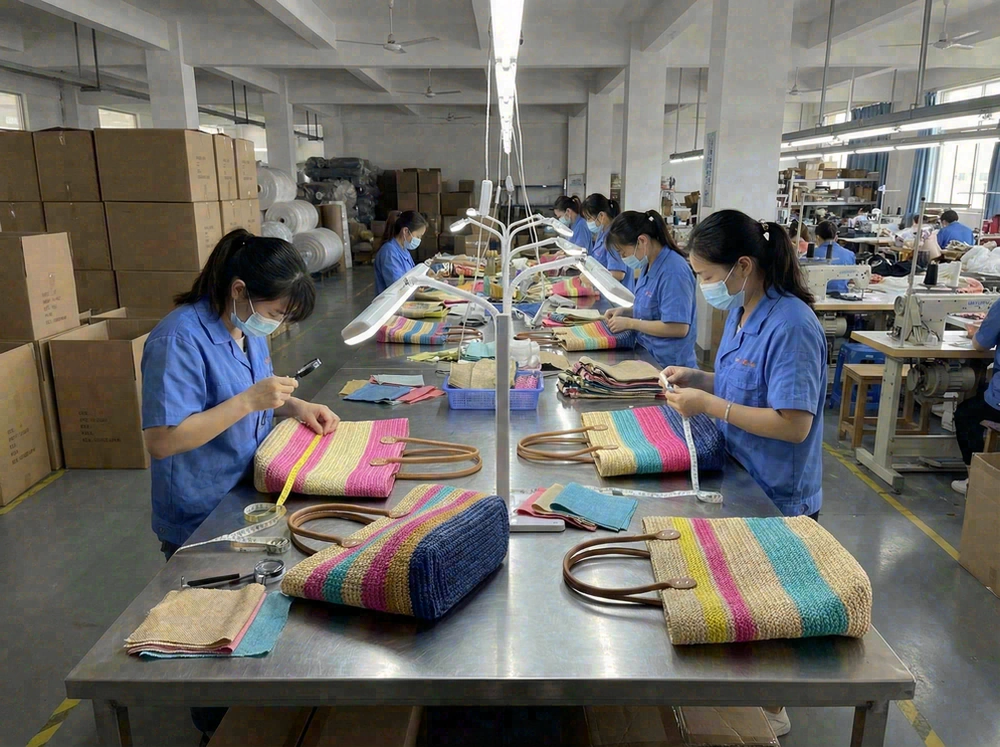
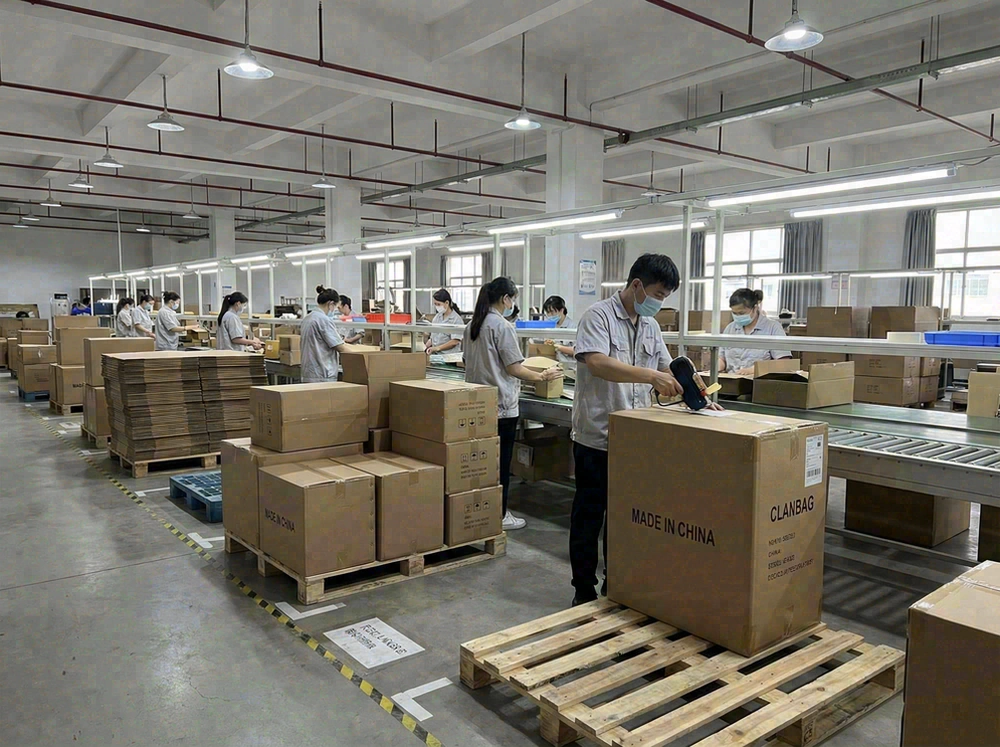
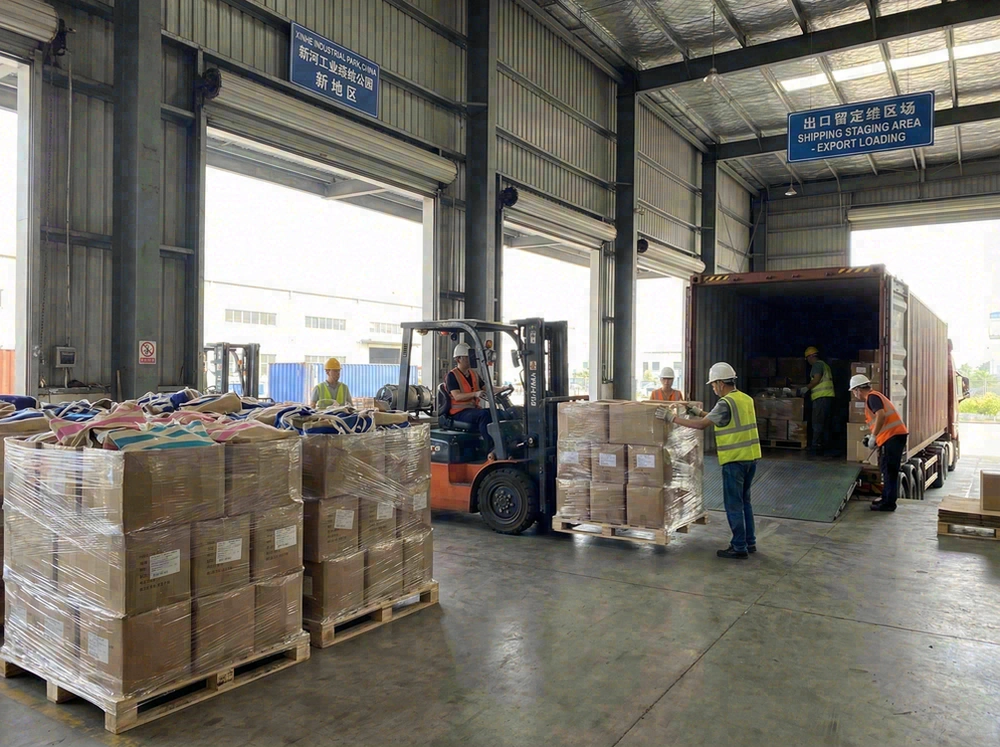
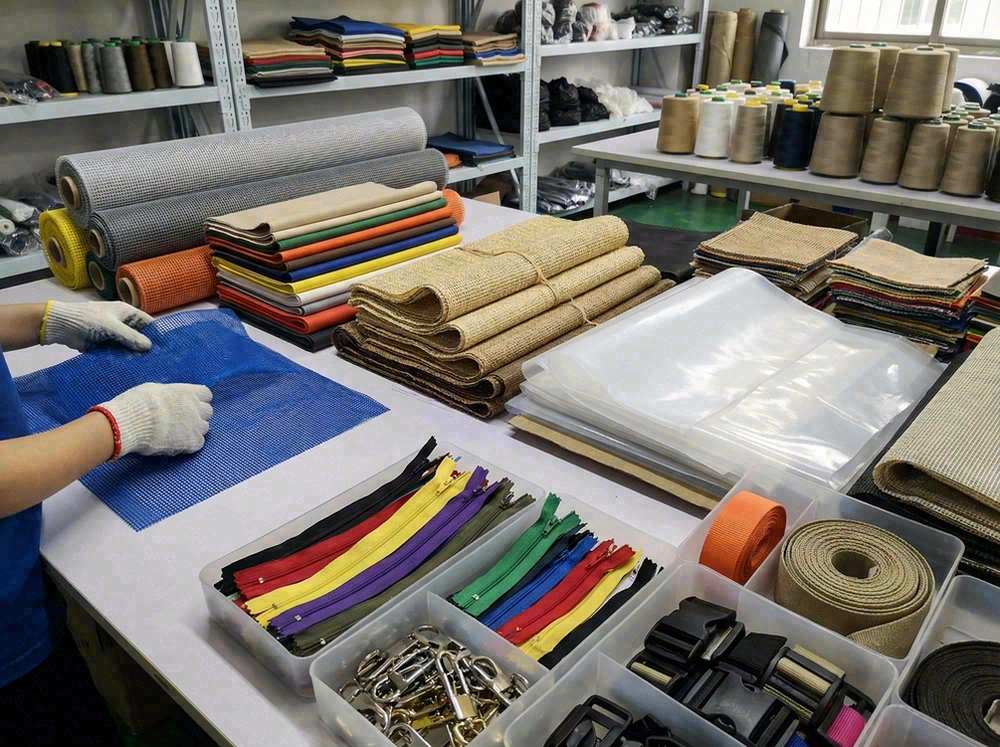
Manufacturing since 2001 B2B wholesale + OEM/ODM Materials, production, QC, packaging, shipping
Request Tour
Virtual & On-Site Tours Available

Factory Tour: Inside Clanbag's Beach Bag Manufacturing

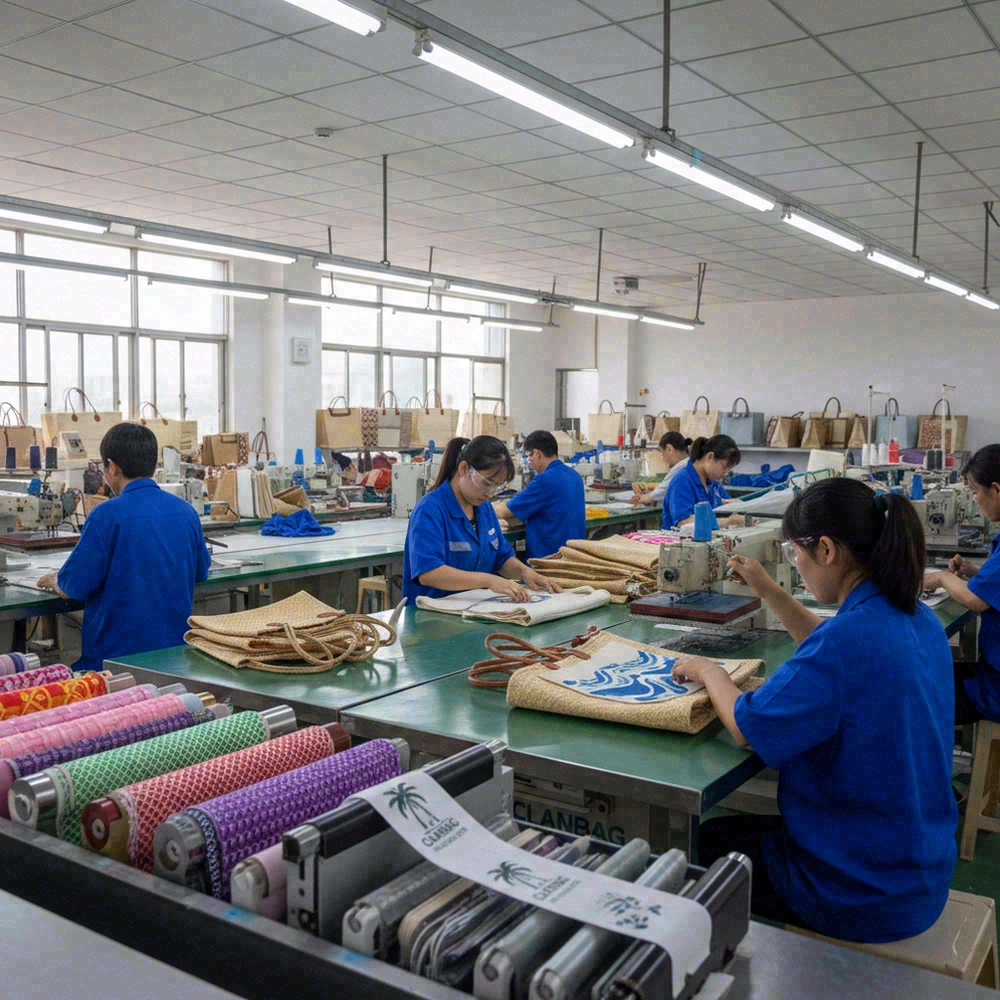
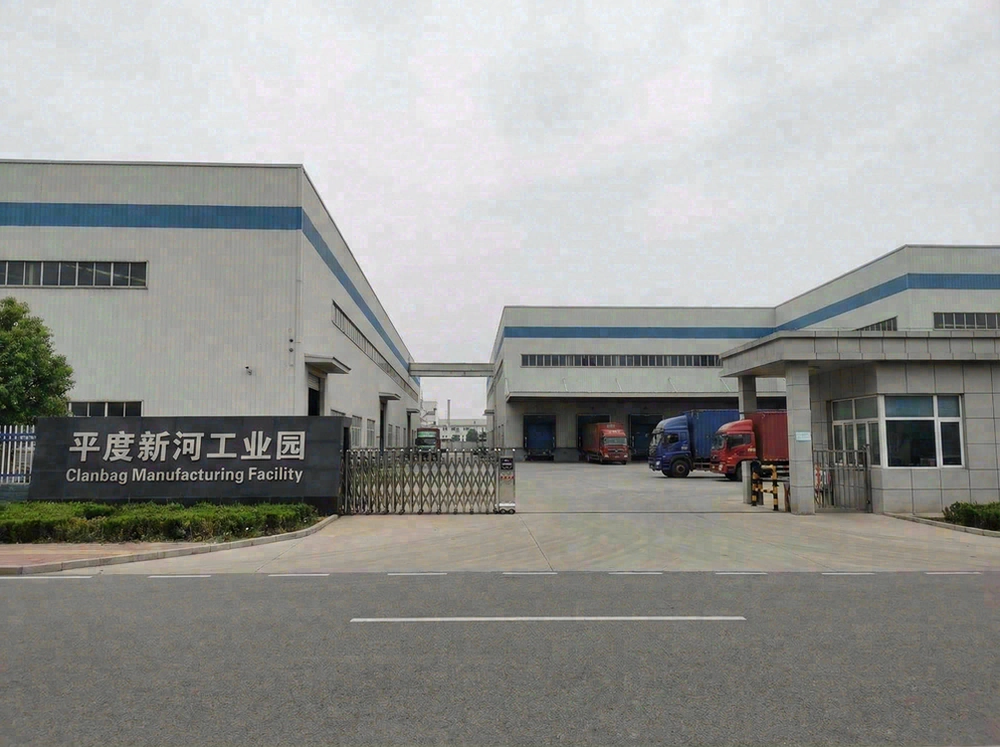
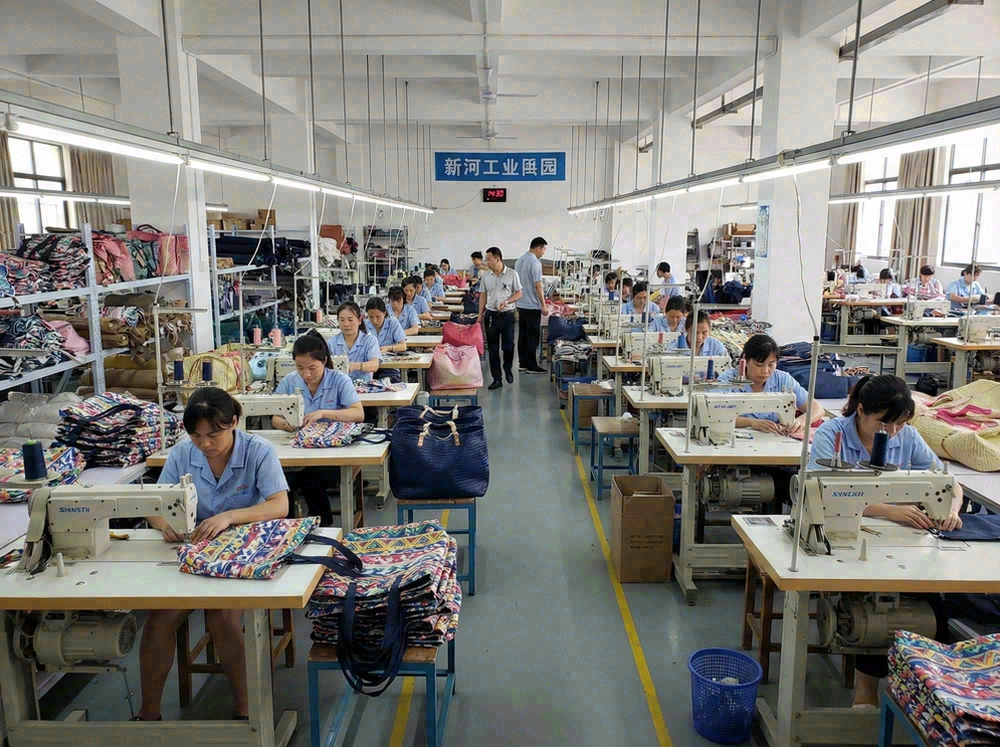
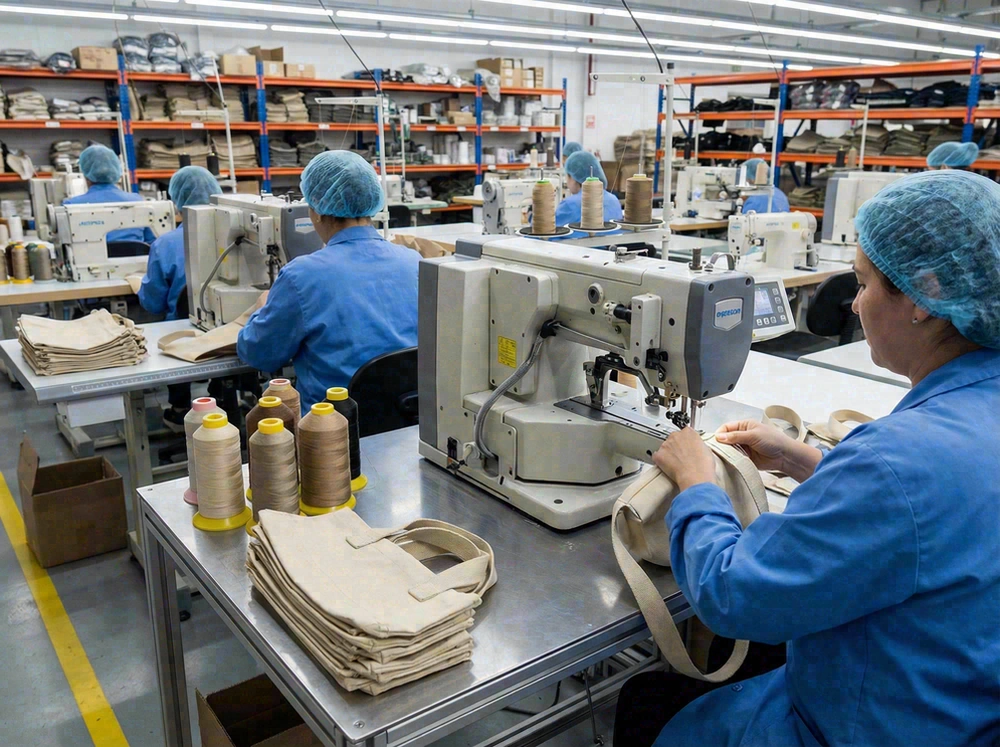
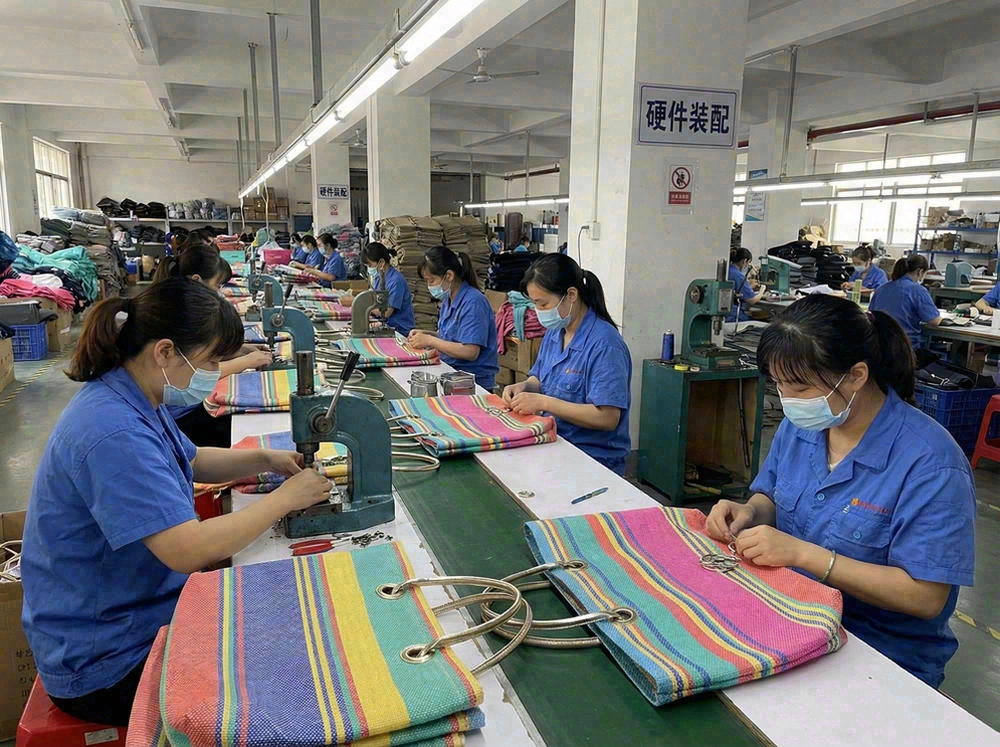
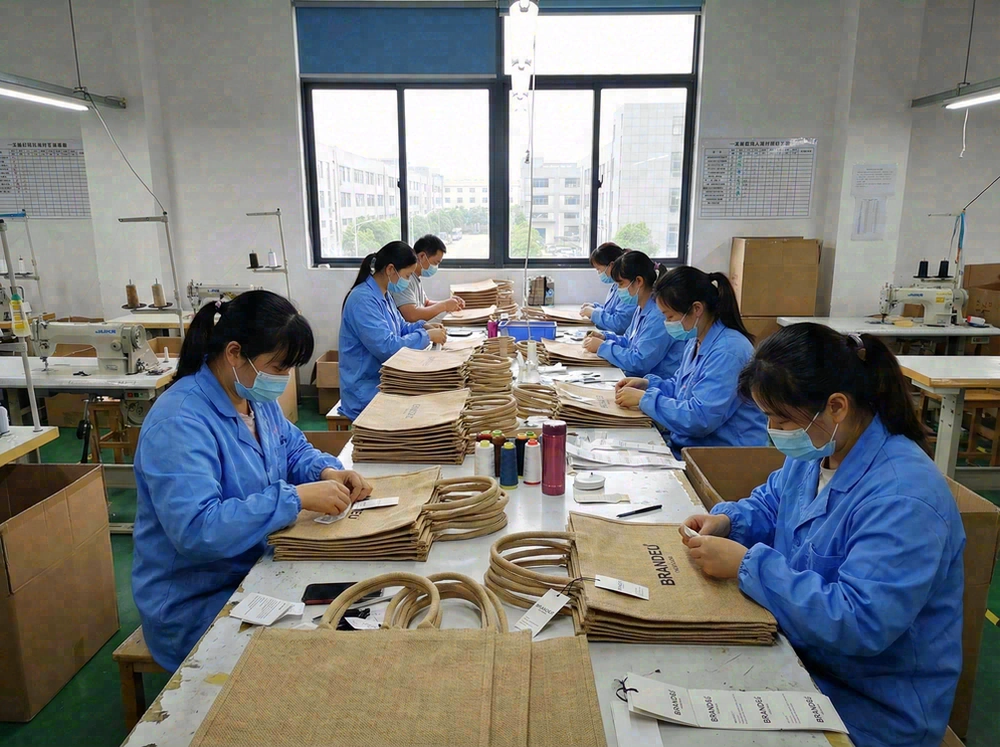
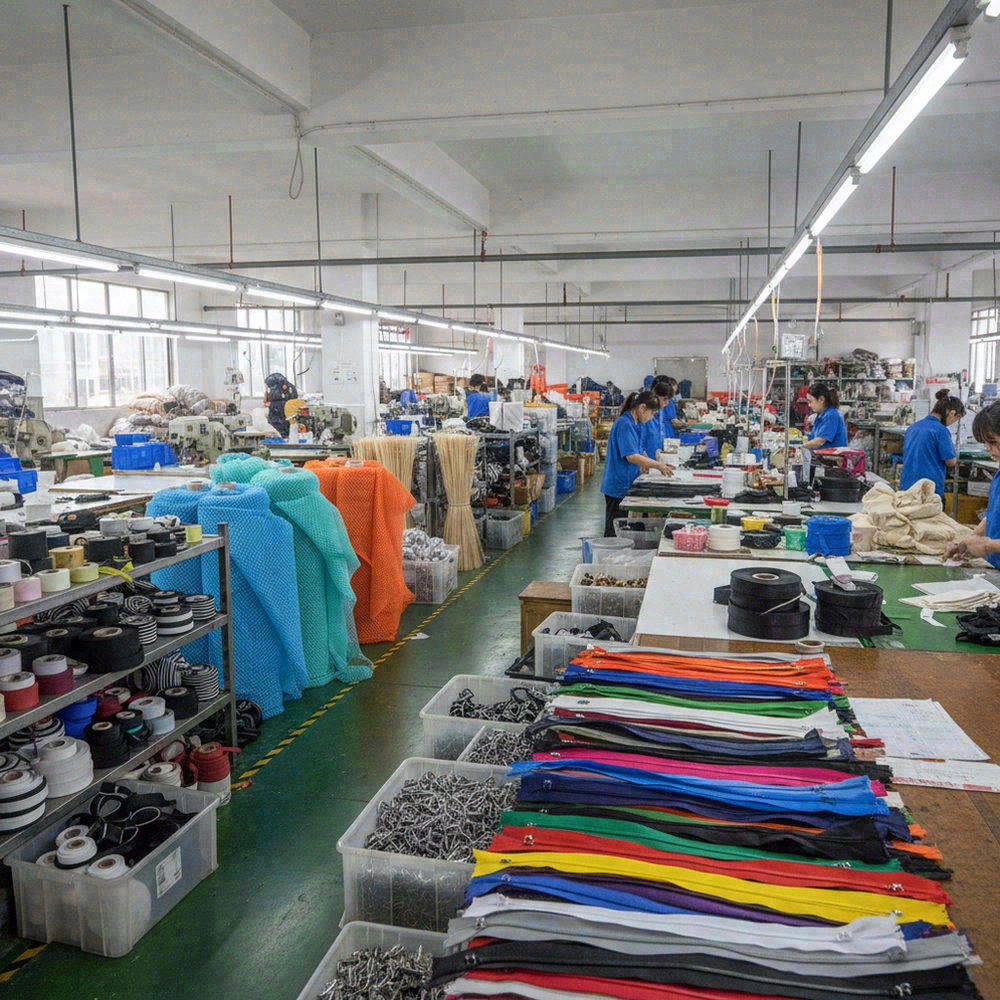
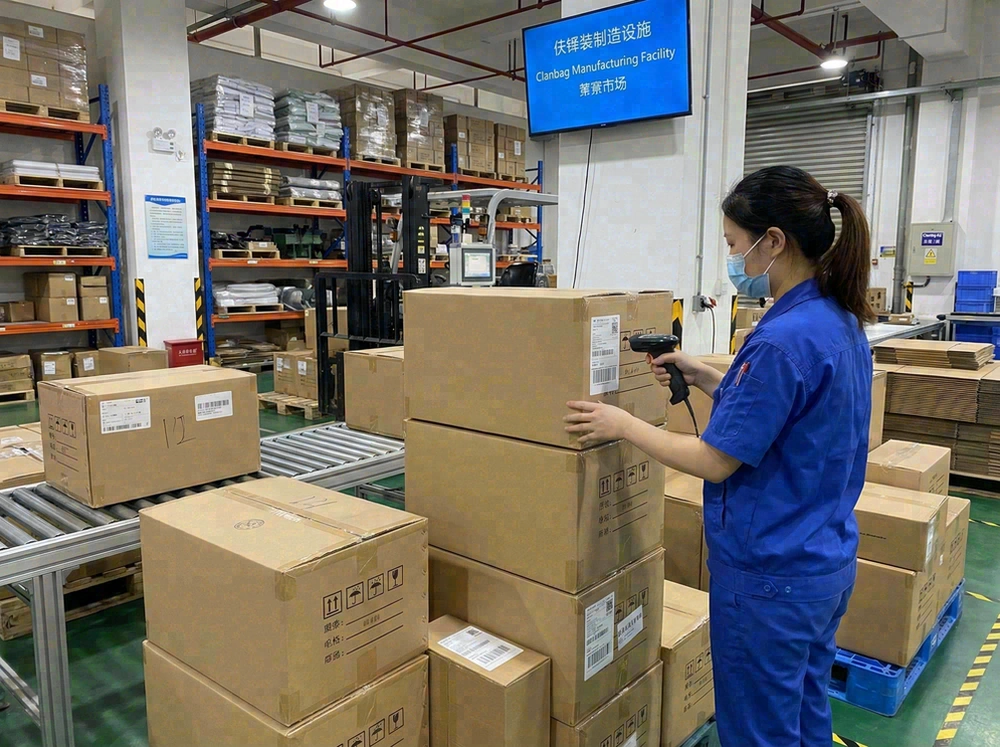
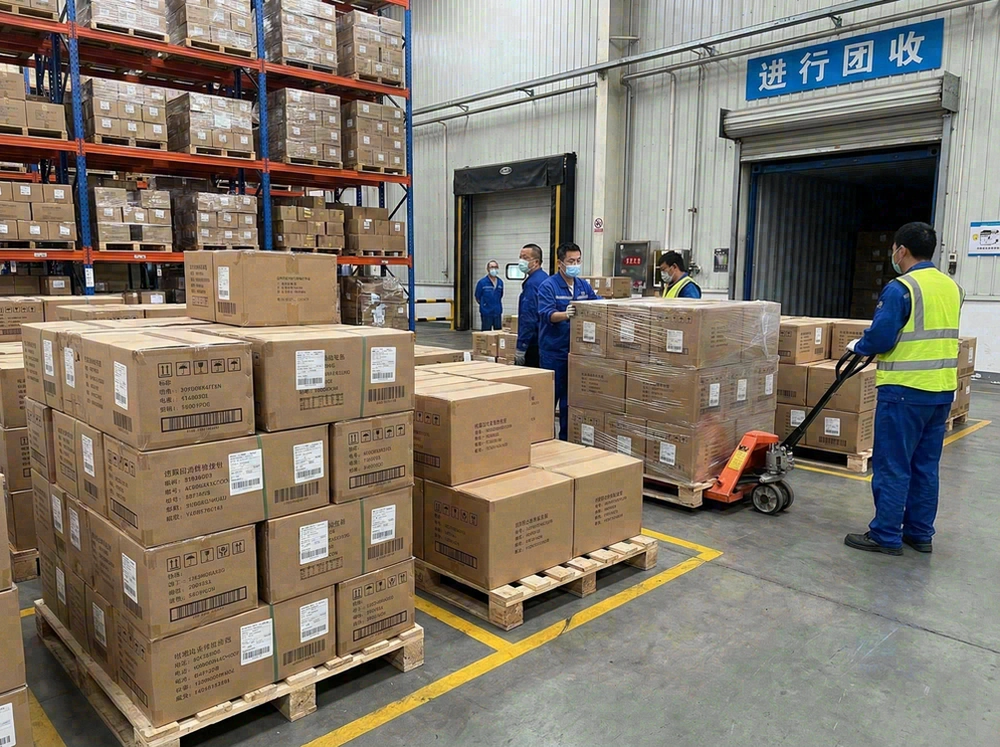
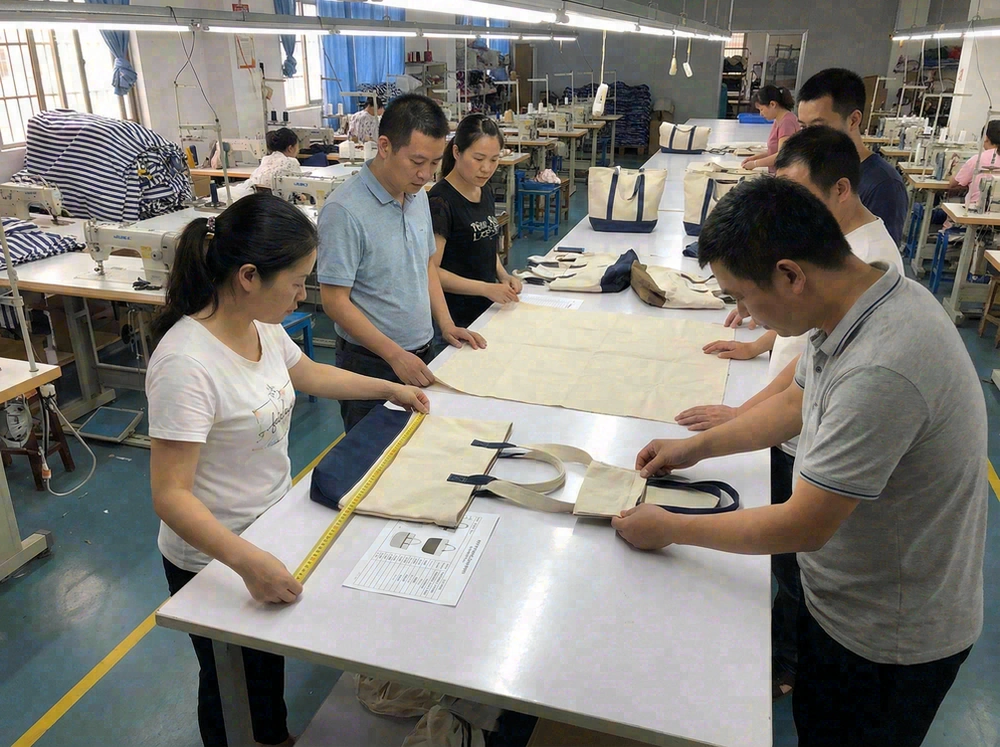
Overseas sourcing works best when you can verify the factory behind the quote. This page gives you a transparent look at our beach bag factory china - the production lines, quality checkpoints, and packing flow that support export orders. You will see how raw materials enter our Pingdu, Shandong bag manufacturing facility, how cutting and sewing teams build each style, and how QC confirms dimensions, stitching, and hardware before cartons are sealed.

Real workflow, buyer-focused

Follow the order path from incoming inspection to final packing so you can evaluate consistency, cleanliness, and process control.

QC you can audit

See checkpoints, defect handling, and inspection documentation practices designed for B2B accountability.

Export-ready packing

Review labeling, carton marking, and pre-shipment proofing options for wholesale and retail programs.

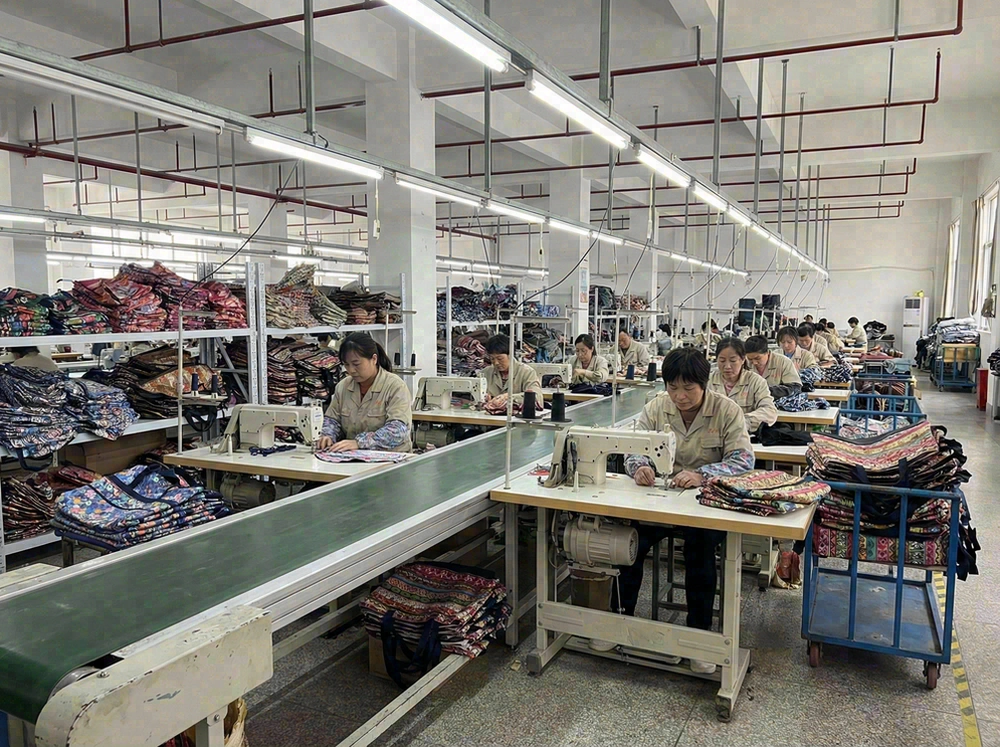
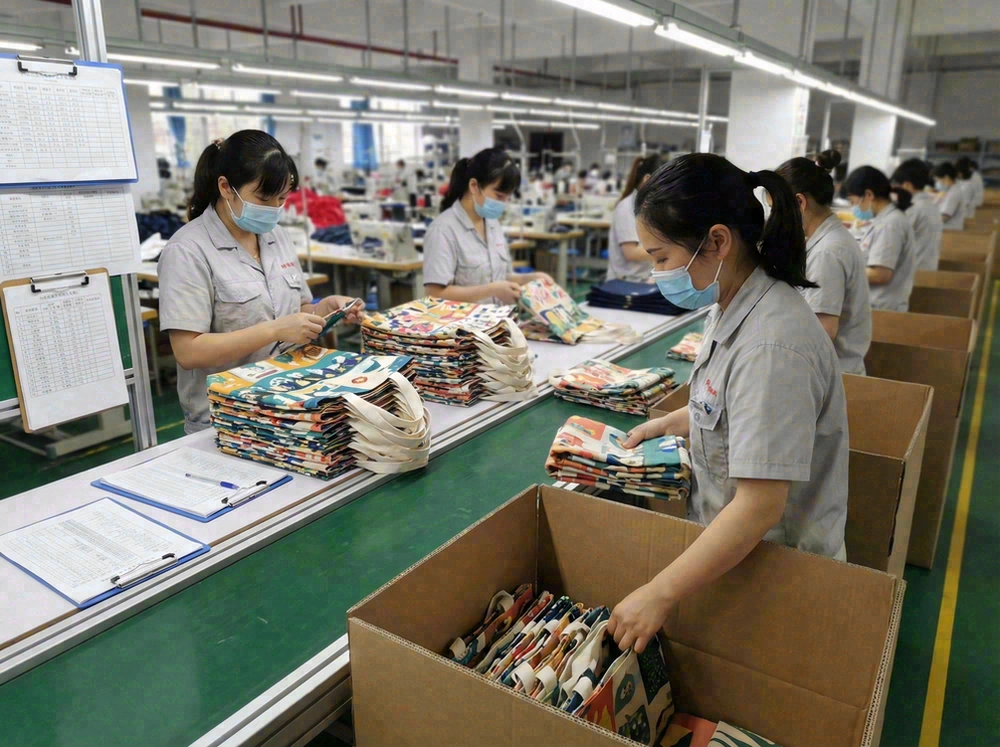
Beach bag factory China production line
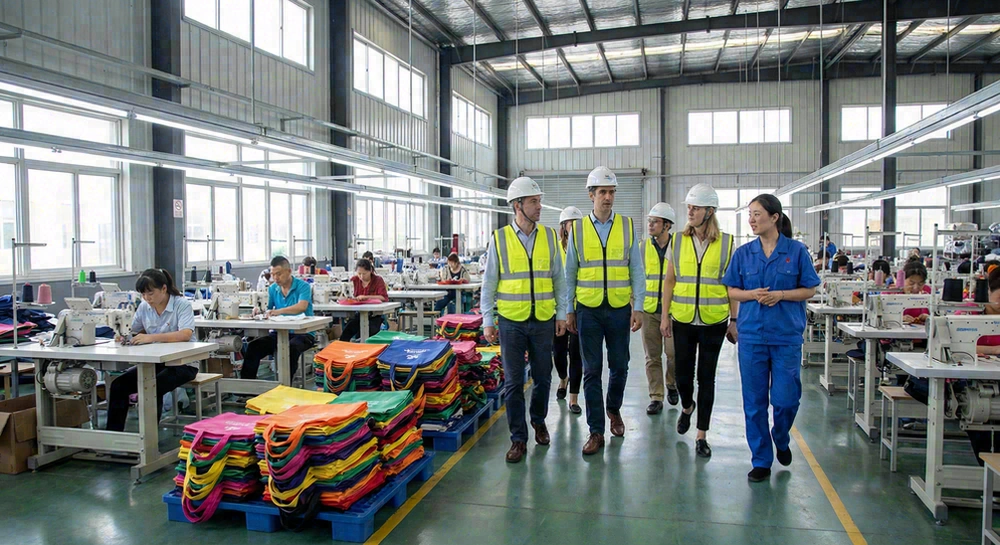
Video Tour Available
Live or recorded walkthrough focused on your bag style
20+
Years Experience
Planning Guidance

Capacity and Lead Time (Practical Ranges)

Because every bag style is different, capacity is best discussed as a plan, not a single number. A simple mesh tote may run faster than a complex lined bag with multiple pockets and hardware. What we can always provide is transparency: how we schedule lines, what steps are on the critical path, and what evidence you will receive before shipment.

If you are comparing suppliers, use the ranges below as planning guidance and request a style-specific schedule for confirmation. This approach helps buyers evaluating a beach bag factory china make realistic timelines without relying on inflated claims.

What Most Impacts Timeline

  • Custom materials and hardware sourcing lead times
  • Number of colors and print placements to control
  • Complex construction details (lining, pockets, zippers)
  • Retail packaging requirements and labeling rules
  • Inspection timing (in-house, buyer-appointed, or third-party)

Planning Reference Table

Item
Typical Range
Notes
MOQ per style/color
300-2,000 pcs
Depends on materials, logo method, and component sourcing.
Sample lead time
5-12 days
After artwork and materials are confirmed; complex styles take longer.
Mass production lead time
20-45 days
Seasonality, complexity, and order quantity affect the schedule.
Quality standard
Buyer standard or agreed sampling plan
Common AQL practices can be followed if specified by the buyer.
Packaging level
Bulk to retail-ready
Polybag, hangtag, inserts, barcode labels, and carton marks as needed.
Shipment support
Photo or video proof before dispatch
Helps confirm packing and labeling accuracy prior to shipment.
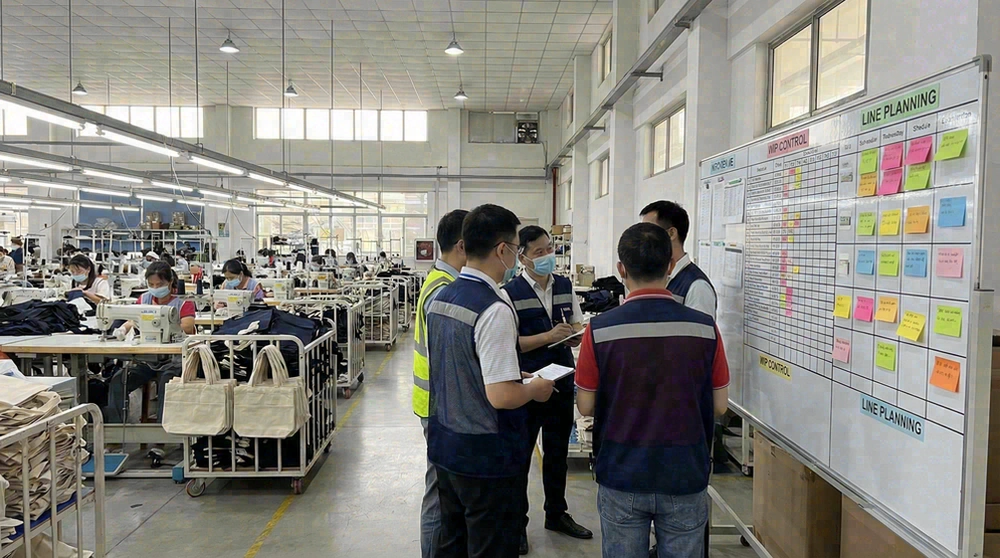
Production line planning and WIP control

Production line planning and WIP control

Compliance & Documentation

Documentation, Audits, and Compliance Support

B2B buyers often need more than a good sample. They need documentation that supports internal approval, market compliance, and risk management. Factory certifications and audit requirements vary by customer and region, so we handle this as a structured process: confirm your required standards, share available documents, and arrange third-party testing or audits when needed. This transparency helps you evaluate fit quickly without assumptions.

Quality Documentation
Social Audit Support
Compliance Testing
Traceability

Common Buyer Requests

Factory Management Systems

  • Quality management documentation (example: ISO-style procedures)
  • Process control records and inspection reporting

Availability depends on current documentation scope; confirm requirements with sales.

Social and Responsible Sourcing Audits

  • Third-party social audits (examples: BSCI, SMETA/Sedex-style)
  • Buyer-specific code of conduct alignment

Audit availability varies; we can discuss what is currently available or can be arranged.

Material and Product Compliance (Market-Dependent)

  • REACH-related documentation where applicable
  • CPSIA-related testing for relevant components where required
  • Prop 65-related declarations/testing where required

Compliance needs depend on your market and product specification.

Packaging and Labeling Programs

  • Retail labeling and barcode application
  • Sustainable packaging requests (example: FSC packaging, if specified)

Confirm packaging standards and documentation requirements during quoting.

What We Can Share During Supplier Evaluation

To help your team evaluate fit quickly, we can provide the following during the supplier qualification process:

  • Factory Photo Set and Process Map

    Visual documentation of our facility layout and workflow stages

  • QC Checkpoint Overview

    Example inspection records (redacted if needed) showing our quality process

  • Packing Verification Examples

    Labels, carton marks, assortment rules documentation

  • Material List by Style

    With supplier documentation where applicable

  • Third-Party Inspection Coordination Plan

    If required by buyer for independent verification

Need Specific Documentation?

Every buyer has different compliance requirements. Contact us with your specific documentation needs and we will confirm what is available or can be arranged for your program.

Discuss Your Requirements
Production Infrastructure

Equipment That Supports
Consistent Output

Equipment matters because it affects repeatability, not because it is a marketing checklist. For B2B buyers, the practical question is whether the factory can hold shape, stitching quality, and branding placement across batches and reorders.

Cutting & Pattern Control

Stable dimensions, clean edges, and repeatable panel shapes across reorders

Buyer Value

Reduces size drift and visual inconsistency that often causes returns or rework

Sewing & Reinforcement

Consistent stitch formation, seam strength, and controlled reinforcement at stress points

Buyer Value

Improves durability for handles, straps, and bottom corners in everyday use

Branding Application

Logo placement accuracy and repeatable appearance across colors and materials

Buyer Value

Protects your brand presentation and reduces rejection risk in retail programs

Hardware & Accessories

Secure attachment of grommets, zippers, pockets, and trims

Buyer Value

Reduces functional complaints like broken hardware or rough zipper operation

Packing & Labeling

Correct unit packing, barcode labeling, carton marking, and shipment staging

Buyer Value

Helps your warehouse receive faster and reduces shortages or mislabeling claims

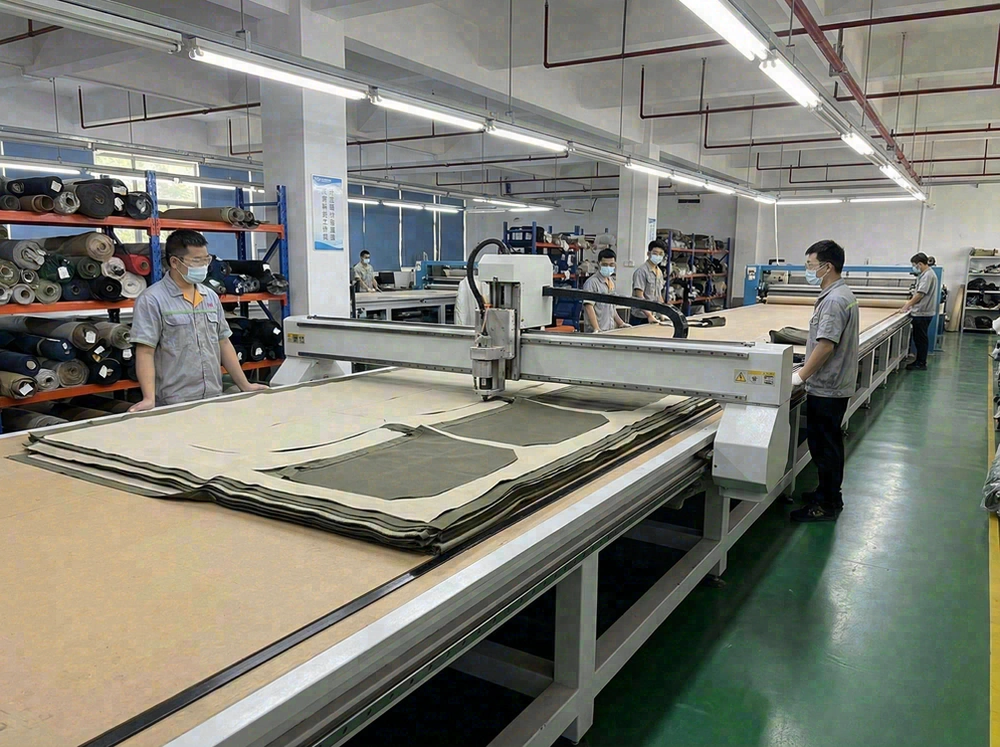
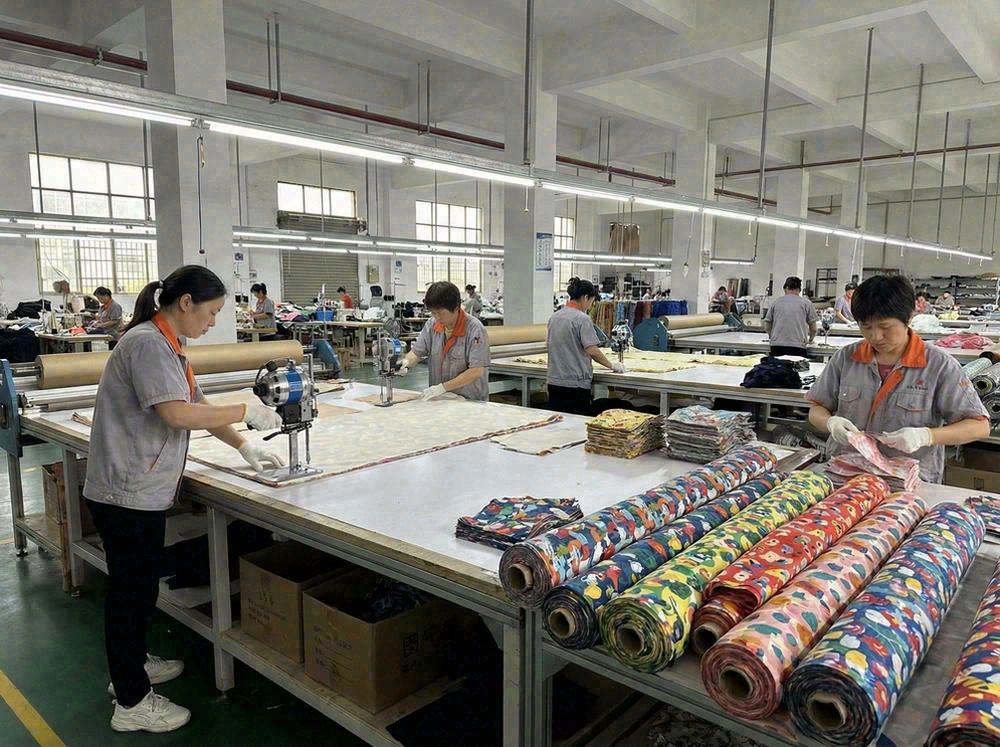
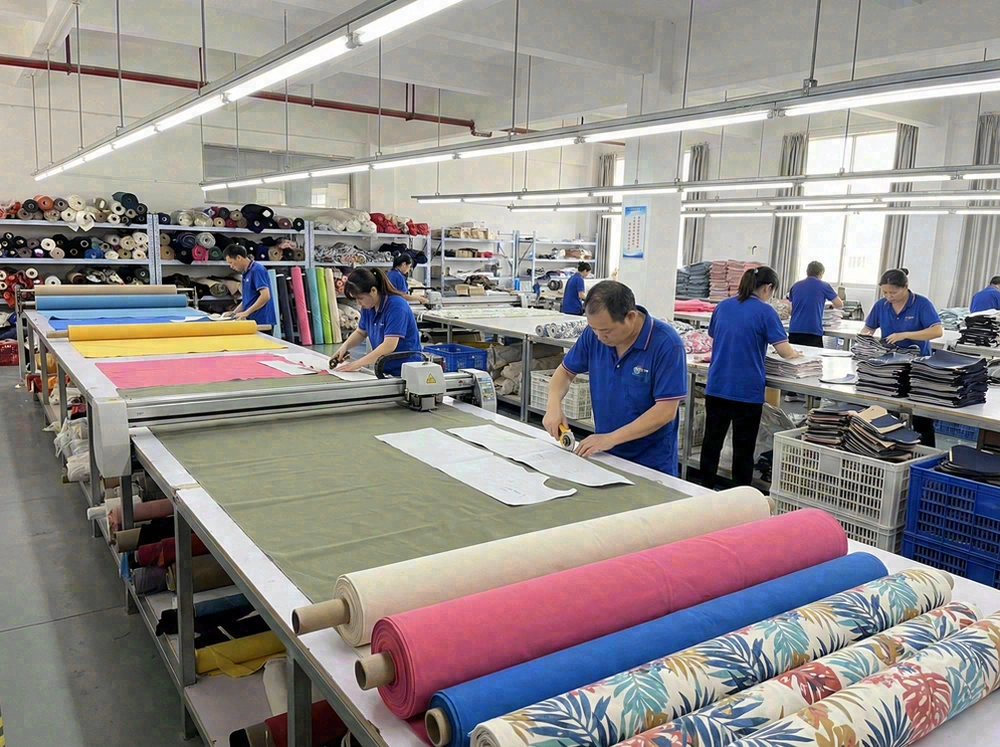
Cutting equipment for bag panels
Cutting Station

Pattern-Controlled Cutting

How patterns are referenced for dimensional accuracy

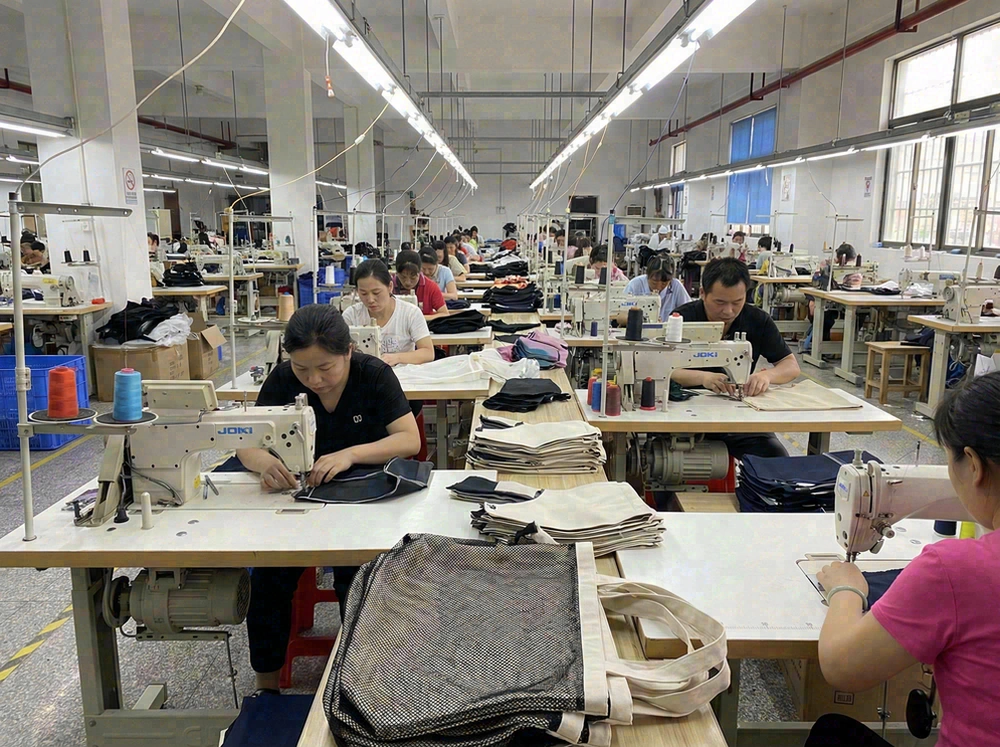
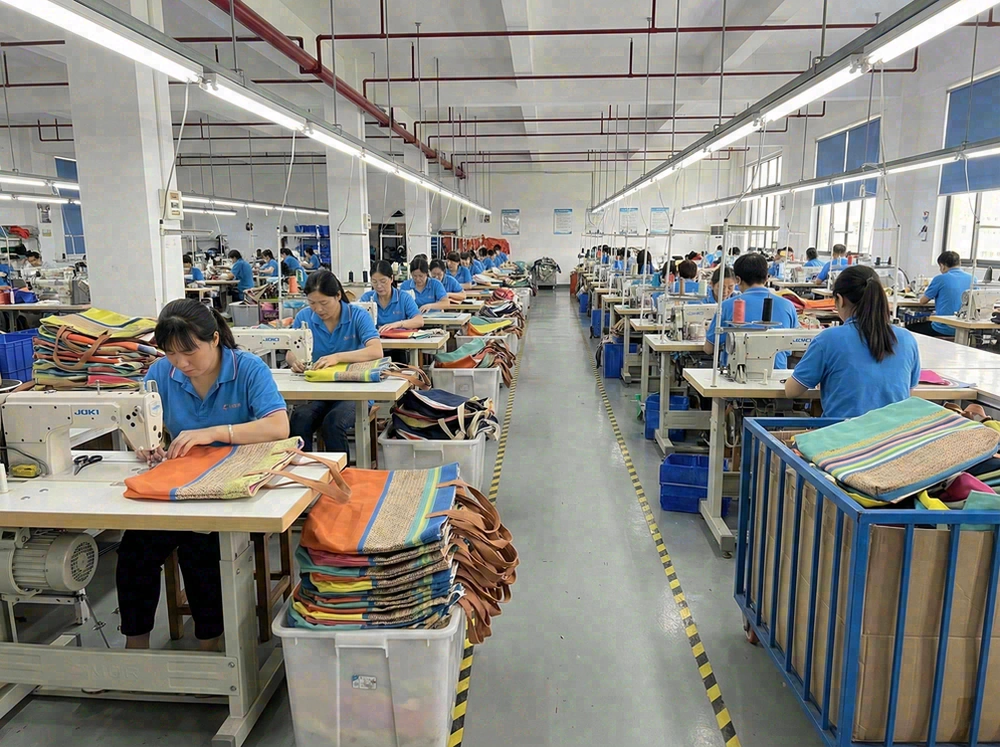
Industrial sewing machines on production line
Sewing Line

Industrial Sewing Stations

Organized workstations for consistent stitch quality

Branding workstation for labels and prints
Branding Area

Logo Application Station

Controlled branding methods for placement accuracy

Beyond the Machine Photos

Many factory tour pages stop at photos of machines. This section explains what each equipment group changes for buyers: consistency, defect prevention, and shipment readiness. The value is not in the equipment itself, but in how it supports repeatable quality across your orders.

Inside Our Bag Manufacturing Facility

This factory tour is built for procurement teams who need proof, not promises. Clanbag operates a dedicated beach bag factory china serving B2B buyers with repeatable processes, clear quality checkpoints, and export-focused packing. Our facility in Xinhe Industrial Park (Pingdu, Shandong) is organized to reduce mix-ups and improve traceability: materials are received and checked, production is staged by order, and finished goods move into final inspection and packing before shipment. If your team cannot visit in person, we can share a structured photo set and walk the floor live on video so you can verify workmanship standards, equipment condition, and how we control quality at each step.

Tour Stops Along the Production Path

1

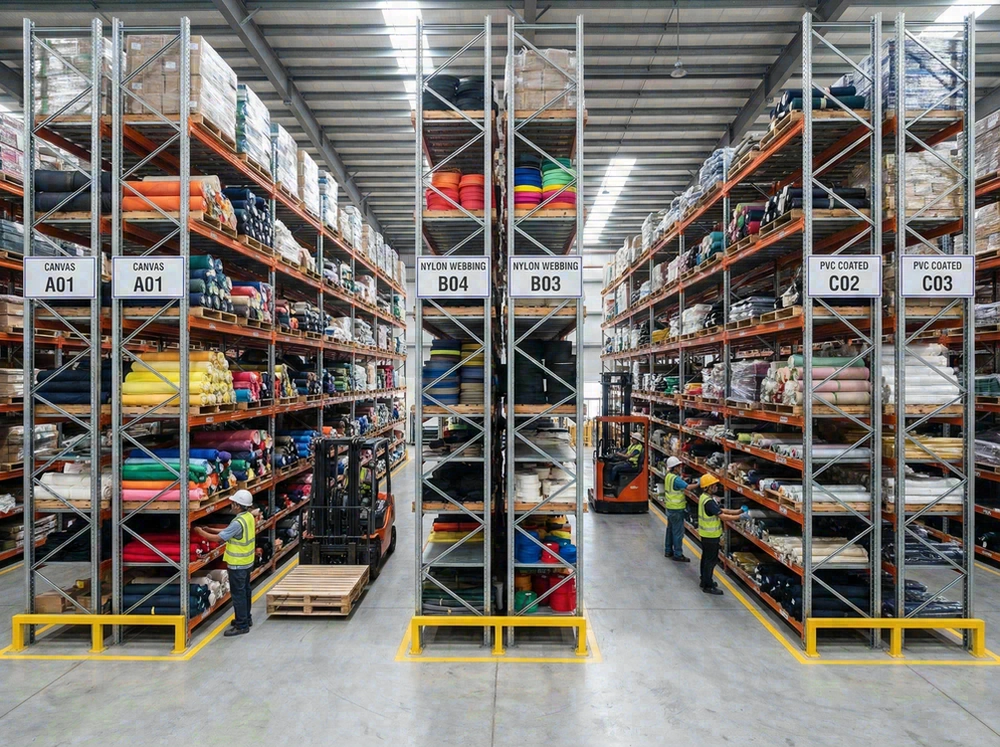
Incoming materials and storage

How we separate lots by order, label key components, and reduce material mix-ups across colors and styles.

2

Cutting and preparation

Pattern control, cutting accuracy, and preparation steps that prevent skewed panels and misaligned seams later.

3

Sewing lines and assembly stations

Line balance, standard work instructions, and in-process checks that keep stitch quality consistent.

4

Reinforcement and hardware

Bartack points, strap anchoring, grommets, zippers, and handle attachment areas where failures often occur if not controlled.

5

Branding and labeling

How we manage print placement, label accuracy, and private label details to reduce rework risk.

6

Final inspection and defect handling

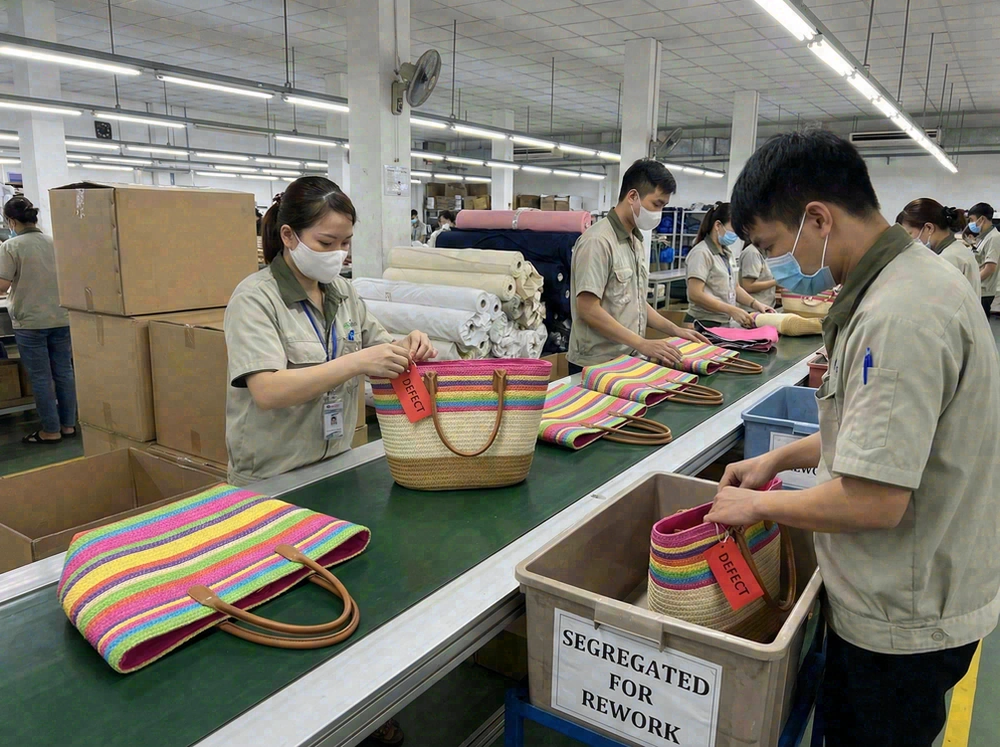
AQL sampling options, measurement checks, and defect segregation to protect your shipment quality.

7

Packing, warehousing, and loading

Carton marking, packing verification, and photo evidence before shipment to reduce claims and surprises.

Choose Your Tour Format

Photo-based virtual tour

Best for: Fast evaluation by sourcing teams across time zones

10+ factory photos plus key process checkpoints and packing examples

Live video walk-through

Best for: Program owners who want to validate details in real time

Floor walk, close-ups of your priority areas, and Q and A with the production team

On-site visit (by appointment)

Best for: Long-term partners and audit-driven programs

Structured route through production, QC, packing, and sample discussion

Factory Photo Gallery

Factory exterior in Pingdu, Shandong
Factory Exterior
Materials warehouse with labeled racks
Materials Warehouse
Fabric cutting and preparation area
Cutting Area
Sewing line for beach bag assembly
Sewing Line
Reinforcement and bartack station
Reinforcement Station
Hardware assembly for handles and grommets
Hardware Assembly
Branding and labeling workstation
Branding Area
Quality control inspection table
QC Inspection
Packing station with carton marking
Packing Station
Shipment staging and container loading
Loading Area

Material Sourcing and Traceability

Materials define the feel, durability, and repeatability of your bag line. We work with common beach bag materials such as mesh, canvas, straw and woven looks, and waterproof synthetics, plus accessories like zippers, webbing, and metal hardware. For B2B programs, the sourcing goal is stability: consistent color and texture across lots, predictable performance, and documentation that supports your market requirements. We qualify materials before they enter production and keep lot separation when needed to reduce shade variation and component mix-ups.

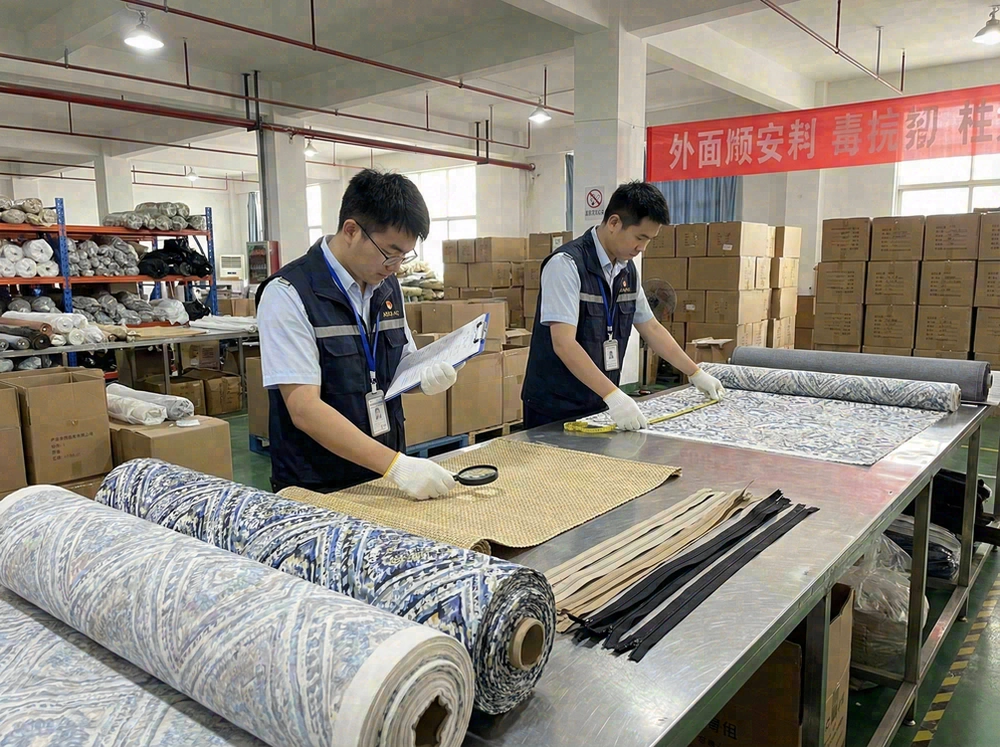
Material swatches for beach bag programs
Webbing, zippers, and hardware components

Materials We Commonly Use

Mesh and net fabrics

Buyer considerations: Look and stiffness, seam holding, snag resistance, and color stability for bright seasonal palettes.

Canvas and cotton blends

Buyer considerations: Weight and hand-feel, print performance, shrink control, and edge finishing.

Straw and woven looks

Buyer considerations: Uniformity, reinforcement needs, and how lining and binding affect final shape.

Waterproof synthetics

Buyer considerations: Welded or stitched construction choices, surface adhesion for logos, and abrasion resistance.

Accessories (webbing, zippers, hardware)

Buyer considerations: Strength at stress points, smooth function, finish consistency, and corrosion risk in coastal use.

How We Reduce Material Risk

Confirm material specs and color targets before sampling and production

Separate lots by order when shade variation is a concern

Inspect key components before line release to avoid late-stage rework

Support buyer-requested testing or documentation for specific markets

Packaging, Labeling, and Shipping Readiness

Packing is where good production can still fail if details are missed. We treat packaging as a controlled step: verify unit packing, labeling accuracy, carton marks, and assortment rules before sealing cartons. For many buyers, this is also where beach bag production becomes retail-ready, with hangtags, inserts, and barcode labels that match your receiving and merchandising needs. We can support photo proofing before shipment so your team can confirm packaging details without waiting for arrival.

Packaging Options

Standard export packing

Bulk packing in export cartons with clear carton marks and quantity verification.

Retail-ready packing

Individual polybag, hangtag, insert cards, and display presentation elements as specified.

Barcode and SKU labeling

Apply unit labels and carton labels based on your SKU system and packing list requirements.

Assortment and set packing

Mixed-color or mixed-size packs with strict counting and clear carton labeling to reduce warehouse issues.

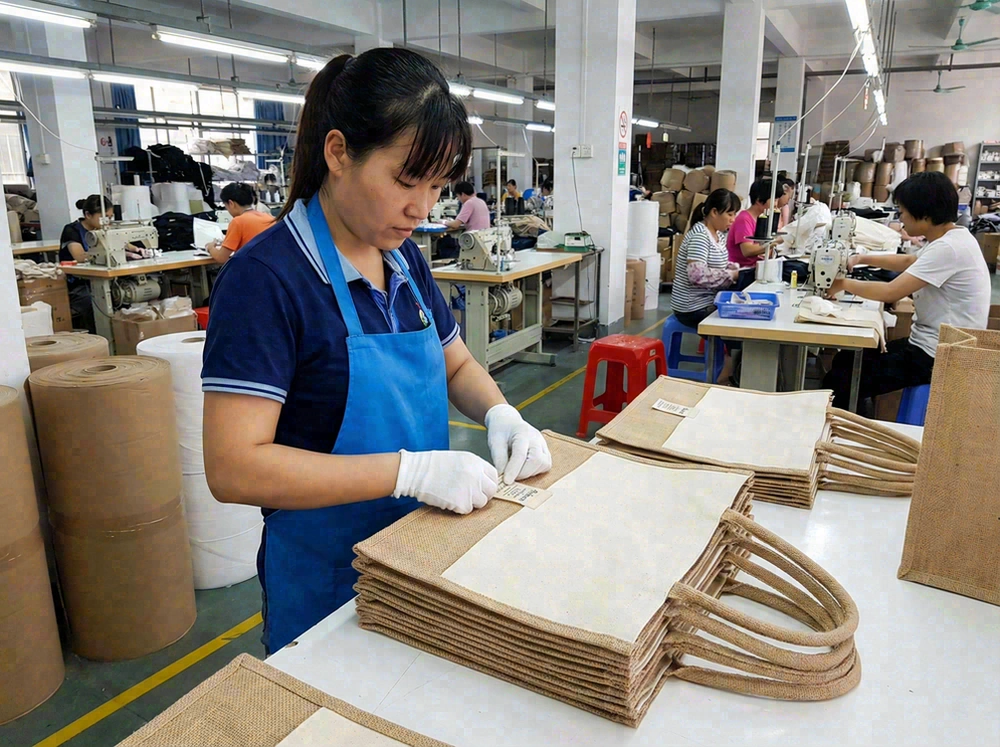
Barcode and carton labeling verification

Labeling Verification

Carton staging for export shipment

Carton Staging

Shipping Support

Pre-shipment proof package

Photos of finished goods, packaging, carton marks, and staged shipments to reduce surprises.

Documentation readiness

Packing list, commercial invoice, and shipment marks aligned to your forwarding instructions.

Lead time transparency

Production progress updates and QC checkpoint timing so you can plan inbound schedules.

Need a specific packaging configuration or labeling template?

Share Your Requirements

From Specification to Shipment: Our Beach Bag Production Flow

To reduce surprises in mass orders, we run a structured, repeatable workflow with checkpoints built around common failure points: pattern accuracy, seam alignment, reinforcement strength, hardware attachment, branding placement, and packing verification. Below is a practical view of how beach bag production typically moves through our factory, and what evidence you can request at each stage (photos, measurements, and inspection records).

1

Pre-production confirmation (spec, artwork, and sample reference)

We align on the product spec sheet before cutting begins: dimensions, materials, handle length, pocket layout, logo method, color targets, and packing requirements. For OEM programs, we use an approved sample or a signed pre-production sample as the reference standard. This reduces the risk of small errors becoming a full-order problem, especially on label placement and accessories. If needed, we can share a pre-production checklist and sample photos so your team can confirm details remotely.

Pre-production review for beach bags
2

Incoming material inspection and lot control

Materials are checked for visible defects and practical performance factors that affect end quality, such as mesh consistency, canvas weight, straw weaving uniformity, zipper smoothness, and hardware finish. We separate lots by order to reduce shade variation issues and component mix-ups. For buyer-controlled programs, we can follow your incoming inspection checklist and retain records by lot. This is also the best time to confirm any compliance documentation you require for your market.

Incoming materials inspection
3

Cutting, marking, and preparation

Accurate cutting is the foundation of consistent appearance and fit. Panels are cut to pattern, marked for alignment, and prepared for assembly (edge finishing, reinforcement pieces, and accessory preparation). This stage is where we prevent common issues like twisted straps, uneven hems, and misaligned pockets. For repeat programs, controlled patterns and clear work instructions help keep size and shape stable across reorders. We can provide in-process photos to confirm that the correct materials and colors are on the line.

Cutting and preparation process
4

Sewing and assembly with in-line checks

Bags are assembled through multi-station sewing lines. In-line checks focus on stitch density, seam allowance, edge finishing, and alignment of key visual elements. For higher-load styles (totes with long handles, reinforced bottoms), reinforcement points are controlled and checked to reduce breakage in use. When a defect pattern appears, the goal is quick containment: stop, correct, and prevent repeat issues before the order progresses. This keeps rework low and protects delivery schedules.

Sewing line assembly for beach bags
5

Branding, labeling, and accessory installation

Branding steps vary by design, such as heat transfer, screen printing, embroidery, woven labels, hangtags, and patches. This is where placement accuracy matters most. We typically verify logo orientation, color match, and alignment against the approved reference. Accessories like zippers, inner pockets, and hardware are installed with functional checks (smooth operation, secure attachment, no sharp edges). For private label programs, we can share close-up photos for approval before moving to final packing.

Branding and labeling on beach bags
6

Final inspection, packing verification, and shipment staging

Finished goods move to final inspection and packing. Inspection can follow your standard or an agreed sampling plan, with measurement checks and appearance review. Packing verification confirms the correct polybag type, barcode or SKU labels, carton marks, and quantities per carton. Before shipment, we stage cartons and can provide photo or video evidence so your team can confirm packing and labeling. This step reduces claims and ensures the shipment matches your receiving requirements.

Final inspection and packing verification

Buyer Evidence You Can Request

At each stage of production, we can provide documentation and visual proof to support your approval process.

Approved sample photos and spec confirmation
Incoming material photos by lot (materials and key components)
In-line workmanship photos at key stations
Branding placement close-ups before packing
Final inspection summary (per agreed standard)
Packing and carton marking proof before shipment
B2B Accountability

Quality Control Built for B2B Accountability

Quality control should be visible, documented, and tied to the risks buyers actually face: inconsistent workmanship, incorrect labeling, missed packing requirements, and avoidable defects that create returns and chargebacks. During beach bag production, our goal is not only to catch defects at the end, but to prevent repeat defects through in-line checks and clear containment. We can align inspections with your checklist and provide photo evidence at agreed checkpoints.

Incoming material checks

Verify key materials and components before they enter production: appearance, consistency, and obvious defects. Lot separation and labeling help prevent color and component mix-ups.

In-line workmanship checks

Monitor seam alignment, stitch quality, reinforcement points, and accessory installation while production is running. Early correction reduces rework and schedule risk.

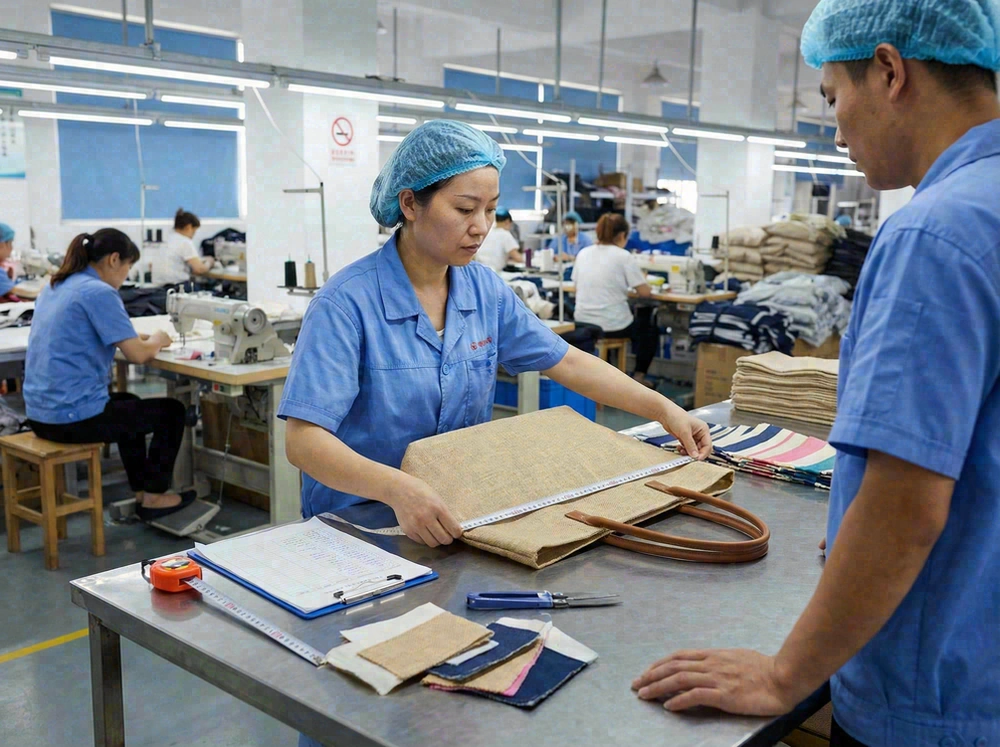
Final inspection and measurement verification

Confirm appearance, dimensions, and functional points (handles, zippers, pockets, hardware). Sampling can follow your standard or an agreed plan.

Packing and labeling verification

Confirm unit packing, barcode/SKU labels, hangtags, carton marks, and quantities per carton. This is a common source of receiving problems if not controlled.

QC measurement check for bag dimensions
Defect tagging and segregation process

What We Check Most Often

  • Dimensions and shape consistency (width, height, gusset)
  • Stitch density and seam finishing (no skipped stitches, clean edges)
  • Handle and strap anchoring (reinforcement points)
  • Hardware function and finish (smooth zipper, secure grommets)
  • Branding placement (logo orientation and alignment)
  • Packing compliance (polybag, labels, carton marks, assortment rules)

Inspection Options

Buyer checklist aligned inspection

We follow your defect definitions and acceptance criteria, reducing interpretation gaps.

Third-party inspection support

You can appoint an inspection company; we coordinate access, staging, and re-checks if needed.

Remote evidence package

Photos and short videos at agreed checkpoints for teams who cannot travel.

Common Questions

Factory Tour FAQ

Get answers to common questions about our beach bag manufacturing facility, processes, and capabilities

Yes. We can schedule a live video walk-through so your team can see the production floor, key workstations, and packing area in real time. To keep it useful for commercial decisions, we focus the route on what matters for your program: your bag type, logo method, reinforcement points, and packaging rules. During the call we can zoom in on stitching, hardware attachment, label placement, and QC checkpoints. After the tour, we can also share a structured photo set and short clips as evidence for internal approval, supplier onboarding, or stakeholder sign-off.

A standard tour covers the full order path: incoming materials storage and inspection, cutting and preparation, sewing and assembly lines, reinforcement and hardware stations, branding and labeling, final inspection, and packing and shipment staging. Because this is a buyer-oriented view of a bag manufacturing facility, we also show the controls that reduce common problems like component mix-ups, inconsistent workmanship, and incorrect carton marks. If you have specific risk points (for example, zipper performance, handle strength, or retail label accuracy), we can spend extra time on those stations.

Quality control works best when it is built into the workflow, not only checked at the end. During beach bag production we typically combine incoming material checks, in-line workmanship checks, and final inspection with packing verification. In-line checks target defect prevention at high-risk points like seam alignment, reinforcement stitches, and hardware attachment. Final inspection can follow your checklist and defect definitions, with measurements and appearance review. Packing verification confirms unit packing, barcode and SKU labels, carton marks, and counts per carton. For remote teams, we can provide photo evidence at agreed checkpoints.

Clanbag supports OEM and ODM programs for beach bags, including custom sizes, material combinations, pockets, handles, hardware, and branding methods. To protect your design, we treat approved samples and artwork files as controlled project materials and limit access to the teams involved in production. For buyer reassurance, we can also share progress photos that focus on workmanship and checkpoints without exposing sensitive design details. If you have strict confidentiality requirements, we can align on non-disclosure expectations and define what can be shown during tours and in photo evidence.

MOQ depends on the materials, components, and customization level. For many programs, minimums start in the hundreds to low thousands per style and color, but a simple construction may allow lower entry than a complex lined bag with special hardware or custom materials. In a beach bag factory china setting, the biggest MOQ drivers are usually component sourcing (zippers, trims), printing setup, and the number of colorways. If you share your target bag type, logo method, and forecast, we can recommend an MOQ that balances price, risk, and reorder flexibility.

We source materials based on your performance and market requirements, then control risk through inspection and lot management. Common buyer concerns include color stability, accessory quality (zippers and hardware), and consistent texture across lots. For compliance, requirements vary by market and product specification, so the right approach is to confirm what you need (for example, REACH-related documentation, CPSIA-related testing for relevant components, or Prop 65-related declarations) and then align on the documentation or testing plan. When third-party test reports are required, we can help coordinate the process for your SKU.

Lead time is style-dependent. Many sampling timelines fall within about one to two weeks after artwork and materials are confirmed, while mass production often ranges from a few weeks to over a month depending on complexity, order size, and seasonality. The main schedule drivers are custom materials or hardware lead times, the number of colorways and branding placements, and any special packaging rules. If your project has a fixed launch date, we recommend confirming a production plan early and reserving inspection time so that approval, QC, and shipping steps do not compress the timeline.

Yes. We can support packaging that is appropriate for wholesale receiving, retail presentation, or e-commerce fulfillment. Options commonly include individual polybags, hangtags, insert cards, warning labels (if required), unit barcode labels, and carton labels that match your SKU system and pack plan. For FBA-style programs, the key is accuracy and verification, so we treat packing as a controlled step with counting, labeling checks, and photo proofing before cartons are sealed. If you provide your packaging specification and labeling templates, we can align early during sampling to reduce rework risk.

Yes. If you appoint a third-party inspection company, we can coordinate access, staging of goods, and any re-check workflow that is required after inspection. We can also align our internal checks to your defect definitions and sampling plan so the inspection result matches your expectations. Many buyers use AQL-style sampling, but the exact level and defect classification should be confirmed in advance to avoid misunderstandings. For additional transparency, we can provide measurement photos, defect examples, and packing verification evidence alongside the inspection outcome.

Certification and audit needs vary by buyer and market, so we handle this as a confirmation process rather than a one-size list. Common requests include quality management documentation, social compliance audits, and material or product testing tied to your market. If you are evaluating suppliers, we can share a factory photo set, a process map, and examples of QC and packing verification records (redacted if needed). For formal documentation or third-party test reports, we can confirm what is currently available and discuss how to arrange any additional audits or testing required for your program.

Have a question not covered here?

Ask Our Team
Factory tour request background image
Schedule Your Tour

Request Your Style-Specific Factory Tour

If you are sourcing from a beach bag factory china, the fastest way to reduce risk is to verify the process that will build your order. Request a tour tailored to your bag type, branding method, and packaging rules. We will share a structured photo set and, if needed, a live video walk-through that focuses on workmanship, QC checkpoints, and export packing so your team can approve with confidence.

What to Send Us

  • Bag type

    mesh, canvas, straw look, waterproof, tote, backpack

  • Target size and key features

    pockets, zipper, lining, reinforcement points

  • Logo method and artwork file

    print, embroidery, patch, woven label

  • Estimated order quantity

    and target delivery window

  • Packaging and labeling requirements

    barcodes, hangtags, inserts, carton marks

  • Target market and compliance needs

    documentation requirements for your region

Quick Response
We typically reply within 24 business hours