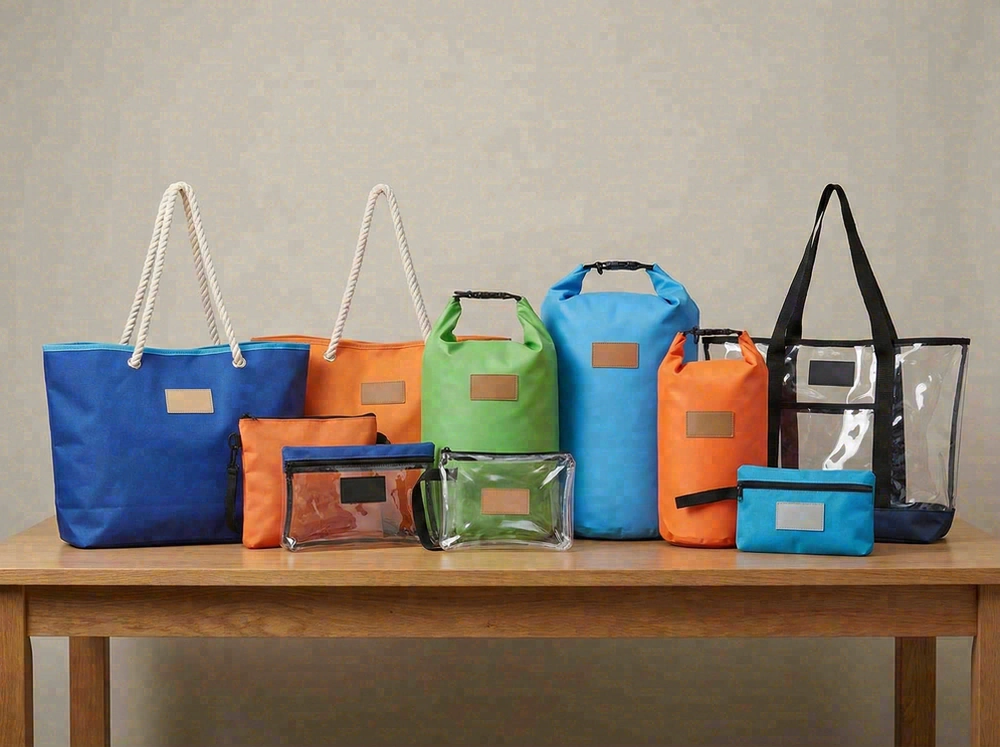
Selecting beach bags for your business isn't simply about finding attractive products at good prices. The right selection aligns with your target market's expectations, supports your brand positioning, and delivers the quality-to-price ratio that drives repeat purchases. Here's how to approach the selection process systematically.
Executive Summary
- Start with target market: End-user demographics determine material, style, and price point decisions
- Material drives perception: Canvas signals durability, straw signals fashion, mesh signals practicality
- Size matters: Medium (16-18") suits most markets; large (20"+) for family-focused segments
- Quality indicators: Check stitching density, hardware quality, seam reinforcement in samples
- Avoid over-featuring: Extra features add cost; only include what your market values
Understanding Your Target Market
The most common selection mistake is choosing bags that appeal to the buyer rather than the end customer. Before considering materials or features, clearly define who will purchase your beach bags:
Market Segment Questions
- Demographics: Age range, income level, lifestyle orientation
- Use context: Casual beach days, resort vacations, sporting events, family outings
- Purchase motivation: Practical need, fashion statement, gift purchase, promotional item
- Price sensitivity: Budget-conscious, value-seeking, premium-indifferent
Common Market Segments
Fashion-Forward Consumers: Prioritize style over function. Willing to pay premium for on-trend designs. Respond to natural materials (straw, raffia), distinctive shapes, designer-adjacent aesthetics. Expect $40-$100+ retail prices.
Practical Family Buyers: Need capacity and durability. Value functional features (multiple pockets, easy-clean materials, sturdy construction). Price-conscious but willing to pay for quality that lasts. Expect $25-$50 retail prices.
Budget Shoppers: Price is primary driver. Seek acceptable quality at lowest cost. Respond to value messaging and basic functionality. Expect $10-$25 retail prices.
Eco-Conscious Consumers: Material sourcing and sustainability matter. Will pay premium for verified eco-credentials. Respond to natural materials, recycled content, transparent supply chain. Expect $30-$60 retail prices.
Key Insight: We've seen retailers fail because they chose bags they personally loved rather than bags their customers wanted. A boutique owner may prefer refined straw totes, but if her customers are practical moms, mesh bags with multiple pockets will outsell the prettier options every time.
Material Selection: Pros and Cons
Material choice is the single most important selection decision. It determines durability, price point, aesthetic appeal, and target market alignment.
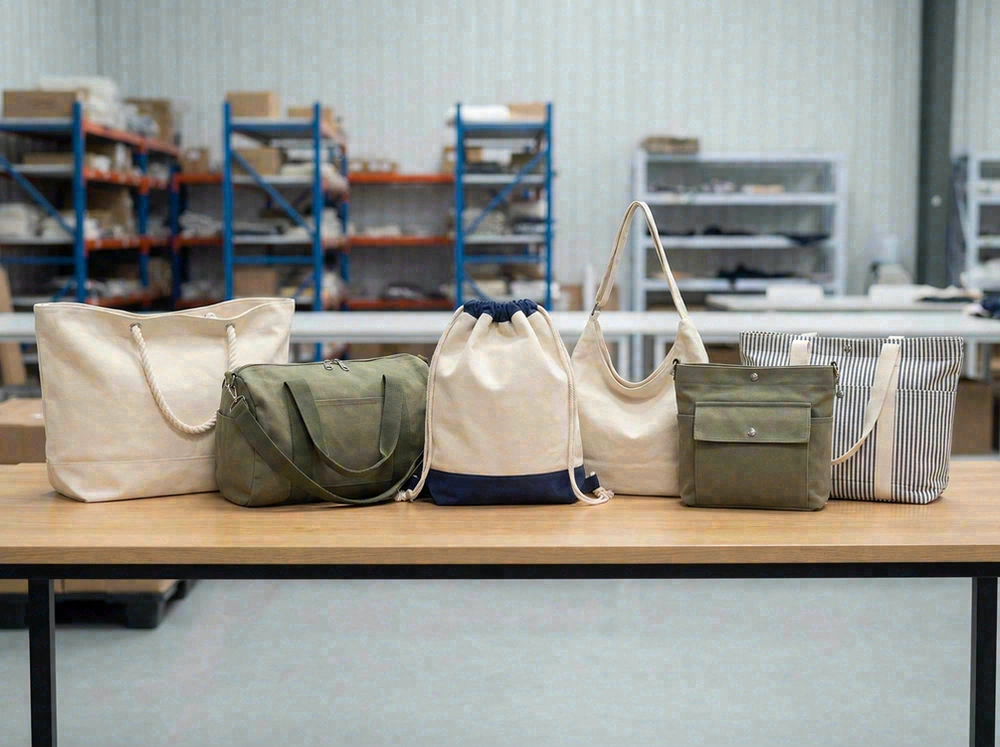
Canvas
Heavy cotton or cotton-blend fabric. The workhorse of the beach bag world.
- Pros: Excellent durability, classic aesthetic, takes printing/embroidery well, washable
- Cons: Heavier than alternatives, absorbs water, can mildew if stored wet
- Best for: Retail lines, hospitality, promotional products
- Price point: $5-$15 wholesale (medium quality)
Mesh
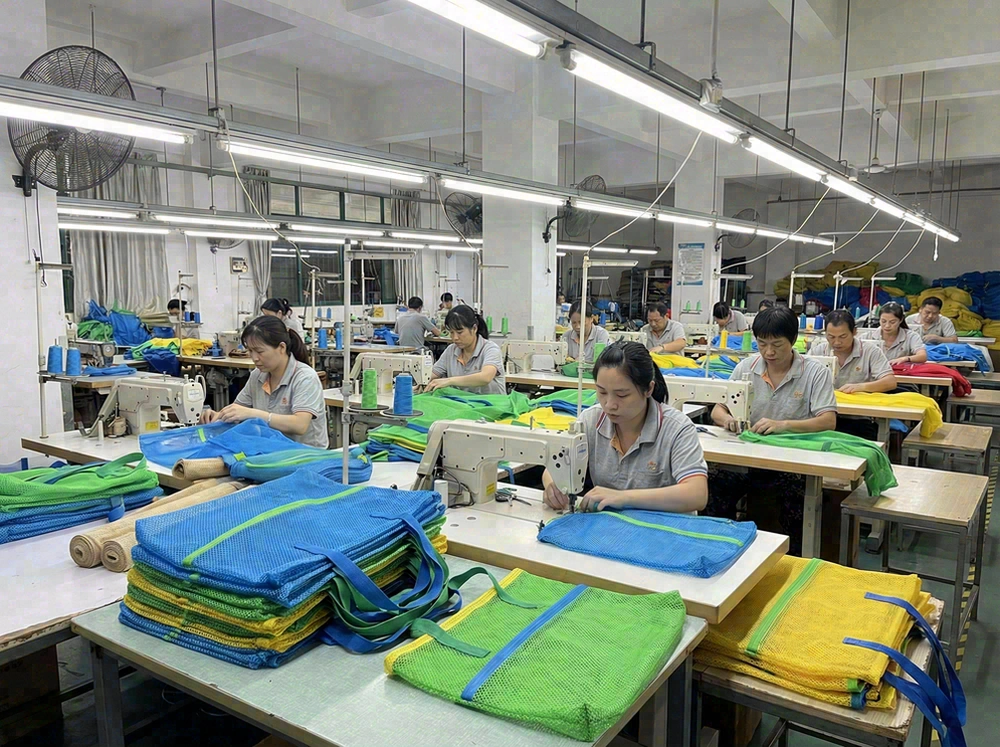
Open-weave polyester or nylon. Popular for sand-shedding practicality.
- Pros: Lightweight, sand falls through, dries quickly, affordable
- Cons: Less structured, contents visible, can snag
- Best for: Beach clubs, family market, promotional giveaways
- Price point: $3-$8 wholesale
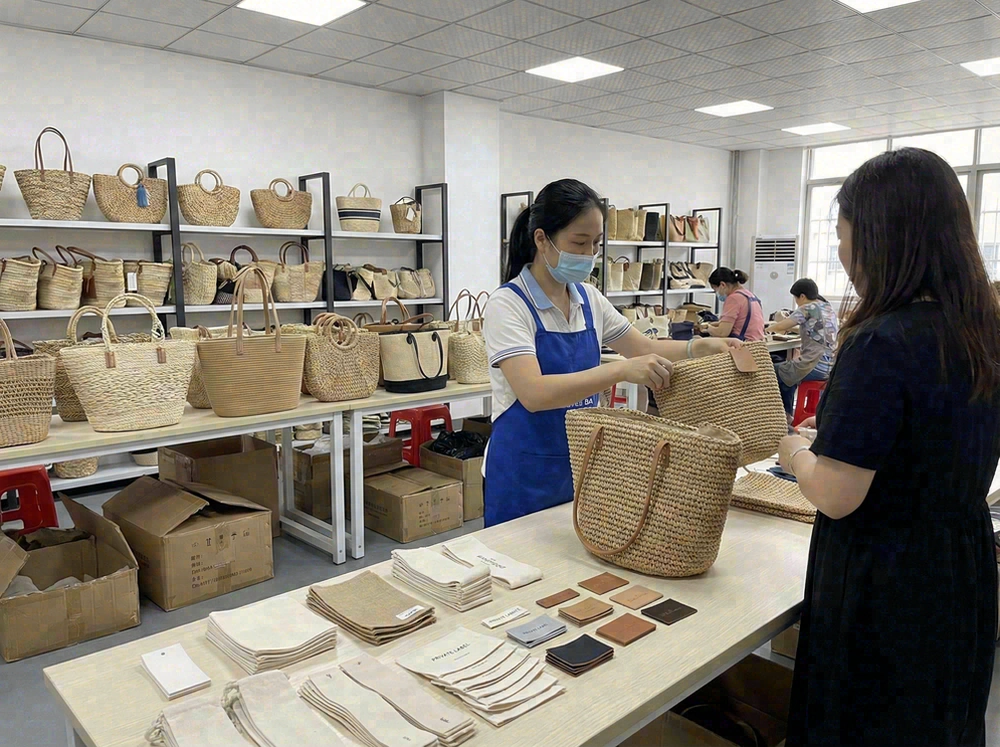
Straw and Raffia
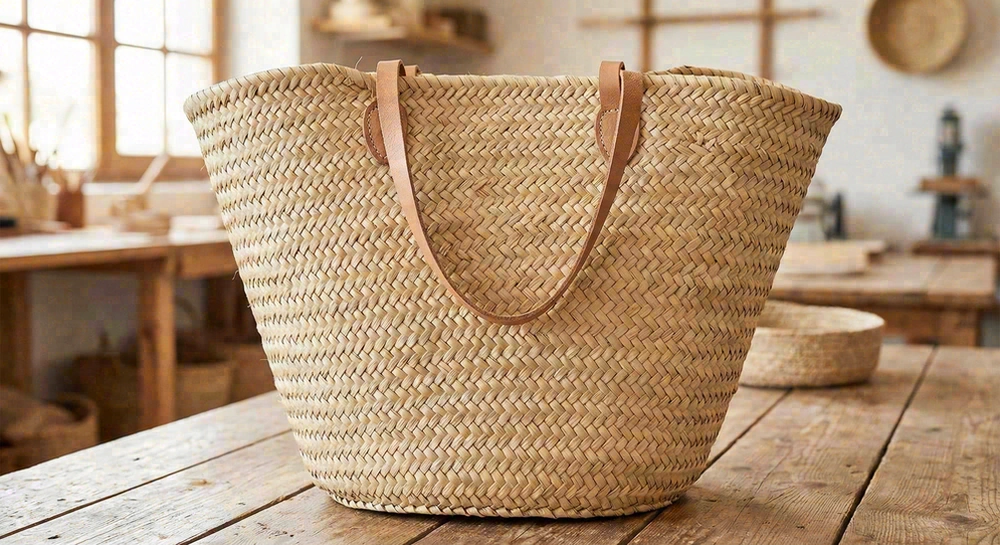
Natural plant fibers woven into decorative patterns. Fashion-forward appeal.
- Pros: Distinctive aesthetic, natural/sustainable positioning, on-trend
- Cons: Less durable, water-sensitive, can shed fibers, higher cost
- Best for: Fashion retail, resort boutiques, luxury hospitality
- Price point: $8-$25 wholesale
Polyester/Nylon
Synthetic woven or coated fabrics. Practical and water-resistant.
- Pros: Water-resistant, lightweight, durable, low cost
- Cons: Less premium perception, limited breathability
- Best for: Budget lines, waterproof applications, promotional products
- Price point: $2-$6 wholesale
Jute
Natural plant fiber with rustic texture. Eco-friendly positioning.
- Pros: Sustainable/biodegradable, distinctive texture, eco-market appeal
- Cons: Rough texture, limited water resistance, can smell when wet
- Best for: Eco-conscious brands, organic/natural product retailers
- Price point: $4-$10 wholesale

Material Comparison Table
| Material | Durability | Water Resistance | Aesthetic | Best Market |
|---|---|---|---|---|
| Canvas | Excellent | Low | Classic | Retail, hospitality |
| Mesh | Good | N/A (drains) | Sporty | Family, beach clubs |
| Straw/Raffia | Moderate | Low | Fashion | Fashion retail, resorts |
| Polyester | Very Good | High | Practical | Budget, promotional |
| Jute | Good | Low | Eco-rustic | Eco-conscious buyers |
Size and Capacity Considerations
Size selection depends on intended use and target market. Here's how to think about it:
Small (Under 16" width)
Personal essentials only—phone, wallet, sunscreen, small towel.
- Best for: Fashion-focused consumers, resort pools, secondary bags
- Market position: Accessory or supplemental bag
Medium (16-18" width)
The most versatile size. Fits beach towel, sunscreen, book, small snacks.
- Best for: General retail, most consumer segments
- Market position: Primary beach bag for individuals or couples
Large (18-22" width)
Room for multiple towels, change of clothes, larger items.
- Best for: Family market, full-day beach trips
- Market position: Family or gear-heavy beach bag
Extra Large (22"+ width)
Maximum capacity for families with children, extended beach days.
- Best for: Family-focused retailers, beach clubs, hotels
- Market position: "Everything bag" for families

Pro Tip: When uncertain about size, medium (16-18") is the safest choice. It satisfies most use cases without the bulk that turns off fashion-conscious buyers or the limitations that frustrate practical shoppers.
Style and Design Factors
Style decisions balance current trends against timeless appeal. Consider your inventory timeline:
Trend-Forward Styles
Fashion-driven designs that align with current season aesthetics.
- Advantages: Appeal to fashion-conscious buyers, higher margins possible
- Risks: Short selling window, inventory risk if trends shift
- Best for: Fashion retailers with fast turnover, seasonal inventory models
Classic Styles
Timeless designs that remain sellable across multiple seasons.
- Advantages: Lower inventory risk, consistent demand, easier reordering
- Risks: Less differentiation, may feel "safe" or uninspiring
- Best for: Hotels, promotional products, retailers with longer inventory cycles
Balance Strategy
Most successful retailers maintain 70% classic, 30% trend-forward mix. This ensures stable base sales while capturing fashion-driven impulse purchases.
Functionality Features
Features add value but also cost. Include only what your target market genuinely values:
Pockets
- Interior zip pocket: Essential for phones and valuables. Cost: +$0.50-$1.00
- Exterior slip pockets: Convenient for quick access items. Cost: +$0.30-$0.70
- Water bottle holder: Practical for beach/pool use. Cost: +$0.40-$0.80
Closures
- Open top: Easiest access, lowest cost. Best for casual use.
- Magnetic snap: Secure yet accessible. Cost: +$0.30-$0.60
- Full zipper: Maximum security, more formal appearance. Cost: +$0.80-$1.50
- Drawstring: Simple closure, beach-appropriate. Cost: +$0.20-$0.40
Structural Features
- Reinforced bottom: Prevents sagging, extends life. Cost: +$0.40-$0.80
- Waterproof lining: Protects from wet items. Cost: +$1.00-$2.00
- Padded straps: Comfort for heavy loads. Cost: +$0.50-$1.00
Quality Indicators: What to Check in Samples
When evaluating samples, these indicators reveal manufacturing quality:
Stitching Quality
- Stitch density: 8-12 stitches per inch minimum for durability
- Thread tension: Even, no loose threads or puckering
- Stress points: Double or reinforced stitching at handles and bottom
Hardware Assessment
- Zipper operation: Smooth, no catching or sticking
- Metal quality: Weight indicates durability; lightweight may bend or break
- Snap closures: Should click firmly, not pop open under pressure
Material Consistency
- Color uniformity: No visible variations across bag surface
- Weave consistency: Even pattern, no loose threads in fabric
- Lining alignment: Smooth installation, no bunching or misalignment
Construction Details
- Seam alignment: Straight, even seams indicate precision manufacturing
- Handle attachment: Riveted or box-stitched for strength
- Edge finishing: Clean, no raw edges or fraying
Price Point Strategy
Your price positioning should align with target market and quality level:
Budget Tier ($10-$25 retail)
Wholesale target: $3-$8 per unit
Quality focus: Acceptable construction, basic features, simple designs
Materials: Polyester, basic canvas, non-woven
Mid-Range ($25-$50 retail)
Wholesale target: $8-$15 per unit
Quality focus: Good construction, useful features, attractive designs
Materials: Quality canvas, mesh, entry-level straw
Premium ($50-$100+ retail)
Wholesale target: $15-$30 per unit
Quality focus: Excellent construction, thoughtful features, distinctive design
Materials: Heavy canvas, quality straw/raffia, leather accents
Common Selection Mistakes to Avoid
Based on years of working with buyers, these are the most frequent selection errors:
Over-Featuring
Adding features customers don't value. Every pocket, closure, and enhancement adds cost. If your target market won't pay for it, it reduces your margin without adding sales appeal.
Ignoring Target Market
Selecting bags you like rather than bags your customers want. Personal preference is not market research. Test assumptions with customer feedback or small trial orders.
Prioritizing Cost Over Quality
Choosing the cheapest option without considering quality implications. Poor quality leads to returns, negative reviews, and lost repeat business. The cheapest bag is rarely the most profitable choice.
Inadequate Sample Evaluation
Making decisions based on photos or digital samples. Physical samples reveal quality issues that images cannot show. Always evaluate physical samples before bulk orders.
Single-Source Selection
Choosing from only one supplier without comparison. Request samples from 2-3 suppliers to understand quality range and pricing realities.
Frequently Asked Questions
How many styles should I stock initially?
Start with 3-5 styles that cover your target market's primary needs. Too much variety disperses inventory investment and complicates management. Expand based on sales data.
Should I choose trendy or classic designs?
For most businesses, 70% classic and 30% trend-forward provides stability with fashion appeal. Adjust based on your customer base and inventory turnover rate.
What's the most versatile material for general retail?
Canvas offers the best balance of durability, aesthetic appeal, and customer acceptance across market segments. It's the safest starting point for new beach bag lines.
How important is the brand/manufacturer?
Very important for quality consistency. Established manufacturers with documented quality systems produce more reliable results than unknown suppliers offering lowest prices.
Should I prioritize features or quality?
Quality first. A well-made simple bag outsells a poorly-made featured bag. Customers notice quality immediately through feel, construction, and durability.
Conclusion
Successful beach bag selection follows a systematic process: understand your target market, choose materials that align with their expectations, select appropriate sizes and features, evaluate quality thoroughly, and price accordingly.
The most important takeaway: selection decisions should be market-driven, not preference-driven. What your customers want matters more than what you find attractive. Use the criteria in this guide to make objective selections that serve your business goals.
Request samples from potential suppliers, evaluate them against these criteria, and make informed decisions. The investment in proper selection prevents inventory mistakes and builds a product line your customers will return to purchase again.